Poppy Pods for Floral Arrangements: The Complete Guide (2026)
Few natural materials pack as much personality into a single stem as the poppy pod! Those round, sculptural seed heads bring instant structure, texture, and a touch of drama to any design — and the best part? They never wilt. Whether you’re a florist building everlasting bouquets, an event planner styling a wedding backdrop, or a home decorator refreshing your mantel, poppy pods deserve a spot in your toolkit.
This is your complete, hands-on guide to poppy pods for floral arrangements. We’ll cover the types, the techniques, the styling secrets, the storage know-how, and exactly where to buy premium pods that arrive in beautiful shape. Ready to dive in? Let’s get creative!
Poppy pods are the mature seed heads of the poppy plant, left behind after the flower’s petals drop away. Once the pod hardens and dries, it develops a firm, woody shell topped with a distinctive crown-like disk. That sculptural shape is exactly why designers love them.
Here’s the short, quotable version: poppy pods for floral arrangements are the dried or fresh seed heads of the poppy plant, prized for their round, textured form that adds height, structure, and lasting interest to bouquets, centerpieces, wreaths, and installations.
Most decorative pods come from Papaver somniferum, the classic large-headed poppy. The pods usually measure between 2 and 6 centimeters across, and they range in color from pale tan to soft grey-green. For solid botanical background on the genus, the Royal Horticultural Society’s poppy guide is a trustworthy reference.
Because dried pods hold their shape for years without water, they’ve become a staple in the dried flower movement. They pair beautifully with pampas grass, wheat, and eucalyptus, and they give any arrangement that earthy, modern edge people love right now.
Types of Poppy Pods Used in Floral Design
Not every poppy pod performs the same way in a design. Knowing the main types helps you order exactly what your project needs — and saves you a ton of frustration later!
Papaver Somniferum Pods
These are the big, bold heads most people picture. Smooth, rounded, and topped with a flat crown, Papaver somniferum pods make a striking focal point in any arrangement. Their generous size means one or two stems can anchor an entire centerpiece.
If you want that statement look for papaver somniferum floral design, the Papaver poppy pods (Grade A) line delivers cleanly dried, well-formed heads.
Poppy Pod Heads
“Pod heads” are pods sold with little or no stem — just the rounded seed head itself. They shine in bowl fillers, vase displays, table scatter, and craft projects like painting and gilding. The Dried Poppy Pod Heads collection is your go-to when you need heads rather than full stems.
Fresh and Untreated Pods
Some designers prefer pods that haven’t been bleached, dyed, or chemically processed. These keep their natural color and organic texture, which suits rustic and boho styles perfectly. Explore the fresh, untreated poppy pods page for that authentic, just-picked look — and yes, you can let them dry naturally over time!
Ornamental and Smaller Varieties
Beyond the large somniferum heads, smaller ornamental pods add poppy texture without overwhelming delicate designs. They’re wonderful in boutonnieres, small bouquets, and mixed dried-flower bunches where fine detail matters.
Quick tip: Buy a few of each type your first time. Mixing large heads, small fillers, and a couple of fresh pods teaches you fast what works for your style.
Why Florists Love Dried Poppy Pods
So what makes these humble seed heads such a florist favorite? A few big reasons stand out.
They last for years. No water, no wilting, no waste. That’s a dream for pre-made products and long events.
They add instant structure. Round heads on straight stems create height and rhythm that soft flowers can’t match on their own.
They mix beautifully. Poppy pods play well with almost every dried botanical, from pampas to bunny tails.
They photograph like a dream. That sculptural silhouette reads gorgeously in wedding photos and product shots.
They protect your margins. Because they don’t perish, you can buy ahead, store safely, and build products on your own schedule.
For florists watching cost per stem, buying wholesale poppy pods in larger quantities keeps prices down while guaranteeing a steady supply through your busy season.
How to Use Poppy Pods in Arrangements (Step-by-Step)
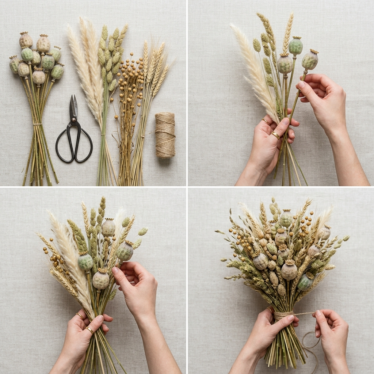
Ready to build your first dried poppy pods bouquet? Here’s a simple, repeatable process that works every single time.
Step 1: Gather your materials. You’ll need a vase or vessel, floral foam or a frog pin (optional for dried designs), sharp snips, and your poppy pods. Grab a few complementary dried botanicals too.
Step 2: Choose your focal pods. Pick your largest, cleanest Papaver somniferum heads to serve as the visual anchors. These draw the eye first.
Step 3: Vary your stem heights. Cut stems at staggered lengths before you arrange. Uneven heights read as natural and give your design a professional, effortless finish.
Step 4: Build the structure. Place your tallest focal pods first, then work outward and downward. Angle stems slightly for a fuller, more organic shape.
Step 5: Fill the gaps. Add smaller pods, grasses, or seed heads to fill spaces and create depth. Layering different sizes keeps the eye moving.
Step 6: Step back and adjust. Turn the arrangement and check it from every angle. A quick tweak here and there makes all the difference!
Pro tip: Handle dried pods gently and support the head as you place each stem. They’re sturdy, but a little care keeps them looking flawless.
Fresh vs. Dried Poppy Pods: Which Is Better?
This is one of the most common questions, and the honest answer is: it depends on your goal!
Feature
Fresh Poppy Pods
Dried Poppy Pods
Lifespan
Short — will dry over time
Years with proper storage
Color
Brighter, greener when fresh
Muted, natural tan tones
Best for
Short-term displays, natural drying projects
Everlasting bouquets, long events, crafts
Handling
More flexible, less brittle
Sturdy but can be brittle
Availability
Seasonal
Available year-round
Choose fresh pods if you want to dry them yourself, love that greener tone, or need them for a short-term natural display. The fresh, untreated poppy pods are perfect here.
Choose dried pods if you want reliability, longevity, and a ready-to-use product. For most floral arrangements — especially weddings and events planned weeks ahead — dried pods win hands down. Curious about quality checks before you buy? The buyer’s guide to dried poppy pod heads covers exactly what to look for.
Poppy Pod Arrangement Ideas
Need inspiration? Here are four styling directions that showcase poppy pods beautifully.
Wedding Arrangements
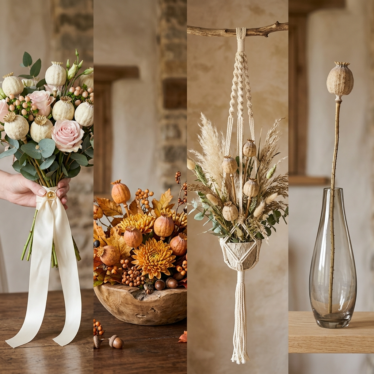
Poppy pods bring an heirloom, timeless feel to weddings. Cluster them in bridal bouquets for texture, line them along a ceremony arch, or scatter loose heads down a reception table. Because they’re dried, you can build everything days in advance — no last-minute wilting stress!
Seasonal Centerpieces
Poppy pods shift effortlessly through the seasons. Pair natural pods with wheat and dried leaves for a warm autumn table, or gild a batch in gold and silver for holiday sparkle. The same bulk supply carries you through the whole year.
Boho Style
For that free-spirited, layered boho look, mix poppy pods with pampas grass, bunny tails, and dried palm. String pods at varying lengths to create a hanging installation with tactile, organic movement.
Minimalist Displays
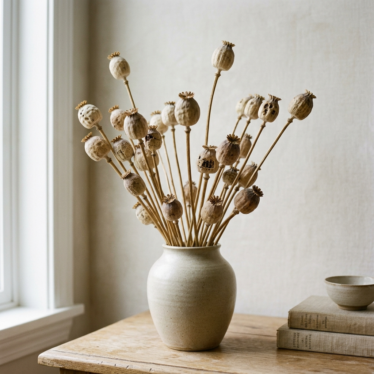
Less is more here. Pop three or four tall Papaver somniferum heads into a slim ceramic vase and let their sculptural shape do all the talking. Clean, modern, and endlessly stylish!
How to Style Poppy Pods With Other Dried Botanicals
Poppy pods truly shine when they share the stage. The secret is balancing their bold, round heads against contrasting shapes and textures.
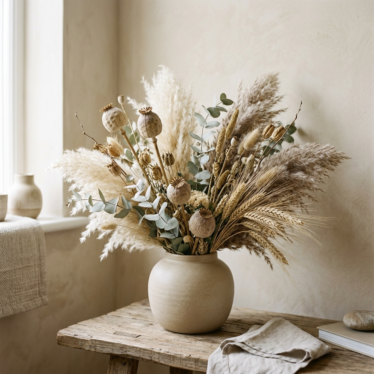
Pampas grass adds soft, feathery volume that offsets the pods’ hard structure.
Dried eucalyptus brings a cool green tone and delicate leaf shape.
Wheat and grasses introduce fine vertical lines and a warm, golden palette.
Bunny tails offer playful, fluffy contrast at a smaller scale.
Dried citrus or pinecones work beautifully for seasonal tablescapes.
Here’s the styling rule of thumb: use poppy pods as your anchors, then layer softer elements around them. Vary your heights, mix your textures, and keep your color palette in a tight, neutral range for a polished, cohesive result.
Designer tip: Layer larger somniferum heads as anchors and tuck smaller ornamental pods into the gaps. That size contrast makes an arrangement feel intentional rather than flat.
Storage & Care Tips
Treat your pods well and they’ll reward you with years of beauty! Dried pods are durable, but they’re not indestructible.
Keep them dry. Moisture is the enemy. Store pods in a dry room with good air flow, and steer clear of basements and bathrooms.
Stay out of direct sunlight. Long-term sun exposure fades natural color. A shaded spot or a closed box keeps tones rich.
Use breathable containers. Cardboard boxes and paper bags beat sealed plastic, which can trap moisture and cause mold. If you must use a bin, toss in a desiccant packet.
Dust occasionally. A soft brush or a quick burst of canned air keeps displays looking crisp and fresh.
Handle gently. Dried pods can be brittle, so layer larger heads loosely and avoid crushing them under heavy items.
Watch for pests. Stored botanicals can attract insects, so check your supply now and then. The University of Minnesota Extension offers practical guidance on drying and preserving botanicals that’s well worth a read.
Storage takeaway: cool, dry, dark, and breathable. Nail those four and quality pods can last for years.
Where to Buy Premium Poppy Pods (Buying Guide)
Quality varies a lot between suppliers, so it pays to buy from a specialist. A supplier focused specifically on poppy pods offers better grading, more consistent quality, and deeper product knowledge than a general floral wholesaler.
Even seasoned designers slip up sometimes! Here are the most common missteps and how to dodge them.
Cutting every stem the same length. Flat and lifeless! Fix it by staggering heights for natural movement.
Overcrowding the arrangement. Give your pods room to breathe. Negative space lets their sculptural shape stand out.
Ignoring texture contrast. All-round-and-hard reads monotonous. Layer in soft grasses or feathery pampas.
Skipping the quality check. Damp or soft pods can attract pests. Choose firm pods with a gentle seed rattle inside.
Fix these four and your arrangements instantly look more intentional and professional.
Frequently Asked Questions
What are poppy pods used for in floral arrangements?
Poppy pods add height, structure, and texture to bouquets, centerpieces, wreaths, and installations. Their round, sculptural seed heads create a natural focal point, and because dried pods need no water, they’re ideal for everlasting bouquets and events planned weeks ahead.
Are fresh or dried poppy pods better for arrangements?
Dried poppy pods are better for most arrangements because they last for years, need no water, and are available year-round. Fresh pods suit short-term displays or projects where you want to dry the pods yourself and enjoy their greener tone.
What type of poppy pod is best for floral design?
Large Papaver somniferum pods are best for statement arrangements thanks to their bold, rounded heads. Smaller ornamental pods work well for delicate designs, while stemless pod heads are ideal for bowl fillers, table scatter, and crafts.
How do I use poppy pods in a bouquet?
Start with your largest pods as focal anchors, cut stems at staggered heights for a natural look, then fill gaps with smaller pods and complementary dried botanicals. Building the tallest stems first and working outward creates a balanced, professional finish.
What do poppy pods pair well with?
Poppy pods pair beautifully with pampas grass, dried eucalyptus, wheat, grasses, and bunny tails. Use the pods as anchors and layer softer textures around them, keeping your palette in a tight neutral range for a polished result.
Can I use poppy pods for wedding arrangements?
Yes! Poppy pods bring a timeless, heirloom feel to weddings. Cluster them in bridal bouquets, line them along a ceremony arch, or scatter loose heads down a reception table. Because they’re dried, you can build everything days in advance with no last-minute wilting.
How long do dried poppy pods last in arrangements?
With proper storage — cool, dry, dark, and breathable — quality dried poppy pods can last for years. Keeping them out of moisture and direct sunlight preserves both their shape and their natural color.
How do I know if poppy pods are good quality?
High-quality pods feel firm and lightweight, with even natural color and intact, sturdy stems. A gentle seed rattle when shaken means the pod is properly dried inside. Avoid pods with soft spots, dampness, or dark fuzzy patches, since these signal moisture damage or mold.
How should I store dried poppy pods?
Store dried poppy pods in a cool, dry, dark place with good air flow. Use breathable containers like cardboard boxes or paper bags instead of sealed plastic, keep them out of direct sunlight, and handle them gently to avoid breakage.
Is it cheaper to buy poppy pods in bulk?
Yes! Buying in bulk lowers your cost per pod, and larger orders usually unlock better pricing tiers. Bulk buying also gives you matching color and size across a whole project, plus lower per-unit shipping.
Where can I buy quality poppy pods for floral arrangements?
Buy from a specialist supplier that lists type, size, and grade clearly and ships with protective packaging. You can browse the full range in the Premium Poppy Pods shop or go straight to lines like Papaver poppy pods and dried poppy pod heads.
Are poppy pods legal to buy?
Poppy pods are widely sold for decorative, craft, and floral use. Laws vary by location and intended use, so it’s your responsibility to follow local regulations when buying, storing, and using them. This information is provided for decorative and general informational purposes only and is not medical or legal advice.
Start Your Next Arrangement
Poppy pods are one of the most flexible, forgiving, and downright beautiful materials you can add to your floral toolkit. From wedding installations to minimalist mantels, they bring structure and style that lasts for years — no water required!
Ready to create something gorgeous? Browse types and quantities in the Premium Poppy Pods shop, or head straight to the Papaver poppy pods (Grade A) and dried poppy pod heads to find the perfect match for your next design. Your best arrangement yet is just a few pods away — happy styling!
JSON-LD FAQPage Schema
{
  "@context": "https://schema.org",
  "@type": "FAQPage",
  "mainEntity": [
    {
      "@type": "Question",
      "name": "What are poppy pods used for in floral arrangements?",
      "acceptedAnswer": {
        "@type": "Answer",
        "text": "Poppy pods add height, structure, and texture to bouquets, centerpieces, wreaths, and installations. Their round, sculptural seed heads create a natural focal point, and because dried pods need no water, they're ideal for everlasting bouquets and events planned weeks ahead."
      }
    },
    {
      "@type": "Question",
      "name": "Are fresh or dried poppy pods better for arrangements?",
      "acceptedAnswer": {
        "@type": "Answer",
        "text": "Dried poppy pods are better for most arrangements because they last for years, need no water, and are available year-round. Fresh pods suit short-term displays or projects where you want to dry the pods yourself and enjoy their greener tone."
      }
    },
    {
      "@type": "Question",
      "name": "What type of poppy pod is best for floral design?",
      "acceptedAnswer": {
        "@type": "Answer",
        "text": "Large Papaver somniferum pods are best for statement arrangements thanks to their bold, rounded heads. Smaller ornamental pods work well for delicate designs, while stemless pod heads are ideal for bowl fillers, table scatter, and crafts."
      }
    },
    {
      "@type": "Question",
      "name": "How do I use poppy pods in a bouquet?",
      "acceptedAnswer": {
        "@type": "Answer",
        "text": "Start with your largest pods as focal anchors, cut stems at staggered heights for a natural look, then fill gaps with smaller pods and complementary dried botanicals. Building the tallest stems first and working outward creates a balanced, professional finish."
      }
    },
    {
      "@type": "Question",
      "name": "What do poppy pods pair well with?",
      "acceptedAnswer": {
        "@type": "Answer",
        "text": "Poppy pods pair beautifully with pampas grass, dried eucalyptus, wheat, grasses, and bunny tails. Use the pods as anchors and layer softer textures around them, keeping your palette in a tight neutral range for a polished result."
      }
    },
    {
      "@type": "Question",
      "name": "Can I use poppy pods for wedding arrangements?",
      "acceptedAnswer": {
        "@type": "Answer",
        "text": "Yes. Poppy pods bring a timeless, heirloom feel to weddings. Cluster them in bridal bouquets, line them along a ceremony arch, or scatter loose heads down a reception table. Because they're dried, you can build everything days in advance with no last-minute wilting."
      }
    },
    {
      "@type": "Question",
      "name": "How long do dried poppy pods last in arrangements?",
      "acceptedAnswer": {
        "@type": "Answer",
        "text": "With proper storage — cool, dry, dark, and breathable — quality dried poppy pods can last for years. Keeping them out of moisture and direct sunlight preserves both their shape and their natural color."
      }
    },
    {
      "@type": "Question",
      "name": "How do I know if poppy pods are good quality?",
      "acceptedAnswer": {
        "@type": "Answer",
        "text": "High-quality pods feel firm and lightweight, with even natural color and intact, sturdy stems. A gentle seed rattle when shaken means the pod is properly dried inside. Avoid pods with soft spots, dampness, or dark fuzzy patches, since these signal moisture damage or mold."
      }
    },
    {
      "@type": "Question",
      "name": "How should I store dried poppy pods?",
      "acceptedAnswer": {
        "@type": "Answer",
        "text": "Store dried poppy pods in a cool, dry, dark place with good air flow. Use breathable containers like cardboard boxes or paper bags instead of sealed plastic, keep them out of direct sunlight, and handle them gently to avoid breakage."
      }
    },
    {
      "@type": "Question",
      "name": "Is it cheaper to buy poppy pods in bulk?",
      "acceptedAnswer": {
        "@type": "Answer",
        "text": "Yes. Buying in bulk lowers your cost per pod, and larger orders usually unlock better pricing tiers. Bulk buying also gives you matching color and size across a whole project, plus lower per-unit shipping."
      }
    },
    {
      "@type": "Question",
      "name": "Where can I buy quality poppy pods for floral arrangements?",
      "acceptedAnswer": {
        "@type": "Answer",
        "text": "Buy from a specialist supplier that lists type, size, and grade clearly and ships with protective packaging. You can browse the full range in the Premium Poppy Pods shop or go straight to lines like Papaver poppy pods and dried poppy pod heads."
      }
    },
    {
      "@type": "Question",
      "name": "Are poppy pods legal to buy?",
      "acceptedAnswer": {
        "@type": "Answer",
        "text": "Poppy pods are widely sold for decorative, craft, and floral use. Laws vary by location and intended use, so it's your responsibility to follow local regulations when buying, storing, and using them. This information is provided for decorative and general informational purposes only and is not medical or legal advice."
      }
    }
  ]
}

sales@primiumpoppypods.com