
- Your cart is empty
- Continue shopping
-
sales@primiumpoppypods.com
- Posted on
- Categories:Uncategorized
- 0 comments
Papaver somniferum Explained: Botanical Background, Sourcing, and Safety
The botanical world offers few plants as historically significant and widely recognized as Papaver somniferum. Cultivated for centuries, this complex plant serves various agricultural, scientific, and decorative purposes. Understanding its botanical profile, lifecycle, sourcing standards, and strict safety protocols provides a clear foundation for anyone interested in handling or studying these plants responsibly. This guide covers the essential facts about the plant, its morphology, and the rules that may govern its use.
What is Papaver somniferum?
Papaver somniferum, commonly known as the opium poppy, is an annual herb belonging to the Papaveraceae family. Botanical references such as Kew’s Plants of the World Online and the USDA Plants Database classify it as a historically important plant species with agricultural, ornamental, and scientific relevance. Originally associated with parts of the eastern Mediterranean and western Asia, cultivation has spread across many regions due to the plant’s seed production and distinctive visual appeal.
Researchers and agricultural experts study the plant for its unique botanical structure, seed yield, and naturally occurring alkaloid profile. While properly cleaned seeds are widely used in culinary applications, other plant materials may be subject to strict regulatory oversight. Navigating the world of premium poppy pods requires a clear understanding of the plant’s biology, intended use, and applicable laws.
Botanical Characteristics
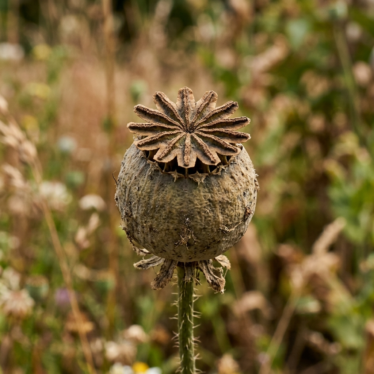
The Papaver somniferum plant features a pale green stem that may appear waxy because of a surface coating known as glaucous bloom. Under suitable growing conditions, it can reach about three to four feet in height. Its leaves are often lobed, serrated, and arranged along the stem without a distinct stalk.
During the blooming phase, the plant produces large, showy flowers with four to eight petals. These petals may appear in shades of white, pink, red, purple, or lavender, depending on the variety. Once the petals fall away, the plant forms a rounded seed capsule commonly called a pod. This capsule has a recognizable star-shaped crown at the top and small pores beneath the crown that help release mature seeds naturally.
For further botanical context, readers can compare taxonomic references from Encyclopaedia Britannica and academic plant databases when studying the plant’s classification and morphology.
Lifecycle and Morphology
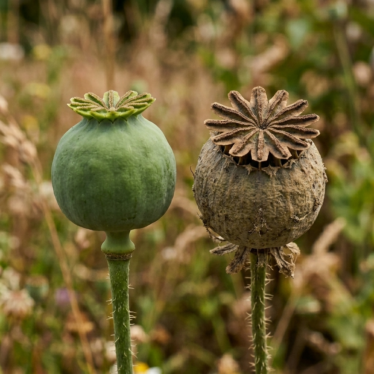
The lifecycle of Papaver somniferum unfolds over a single growing season. It begins with the germination of tiny, kidney-shaped seeds in cool, well-drained soil.
- Vegetative Growth: The plant develops a basal rosette of leaves before sending up a sturdy central stalk.
- Flowering Stage: Large blossoms emerge for a brief flowering period, often lasting only a few days.
- Capsule Development: After the petals drop, the ovary swells into the rounded seed capsule. At this stage, the pod is usually green and smooth.
- Maturation and Drying: As the plant reaches the end of its lifecycle, the capsule becomes firm and dry. Small pores open beneath the star-shaped crown, allowing mature seeds to disperse.
Understanding these stages is useful for botanical education, floral design, and plant identification. It also helps buyers distinguish between fresh botanical material and dried ornamental pods intended for non-consumptive use.
Common Legal Decorative and Agricultural Contexts
Farmers cultivate Papaver somniferum in regulated contexts for the global seed market. Once properly processed and cleaned, poppy seeds are used in baking, cooking, and food manufacturing. Food safety and import standards can vary, so buyers and businesses should consult relevant authorities such as the U.S. Food and Drug Administration for current food-related guidance.
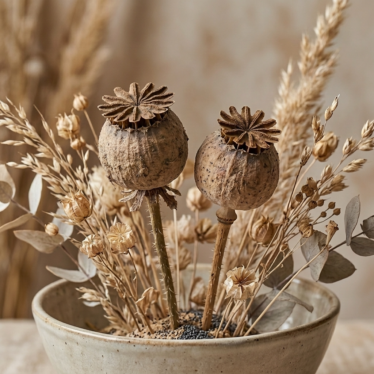
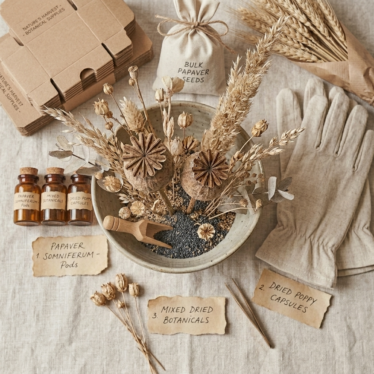
Beyond agricultural food production, the structural beauty of the dried capsule makes it valuable for rustic floral arrangements and crafts. Florists use dried Papaver poppy pods to add natural texture, height, and muted color to wreaths, centerpieces, and seasonal displays.
For botanical displays that emphasize natural form, fresh untreated poppy pods may offer a distinct visual stage before full drying. These materials should remain strictly within ornamental, non-consumptive contexts. They should not be promoted, prepared, or used for ingestion or extraction.
Sourcing Transparency
Working with regulated botanicals requires strong sourcing transparency. Ethical vendors maintain clear records of their supply chain, including product origin, handling practices, and compliance status. This is especially important for botanical materials that may be treated differently under local, national, or international laws.
When you purchase dried poppy pod heads for crafts or decorative arrangements, you should expect clear information about the product’s intended ornamental use. Reputable suppliers focus on the structural and aesthetic value of the dried plant material, avoid unsafe claims, and encourage customers to verify local regulations before purchase.
A transparent sourcing approach should include:
- Clear botanical identification
- Non-consumptive use guidance
- Safe handling information
- Storage recommendations
- Compliance-minded product descriptions
- Avoidance of preparation, extraction, or ingestion claims
Safety and Handling Considerations
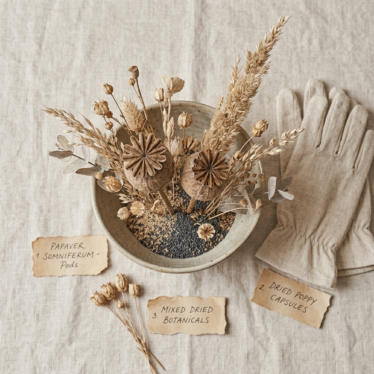
Handling Papaver somniferum products requires careful attention to safety. Parts of the plant may contain naturally occurring alkaloids that can pose serious health risks if misused. For that reason, dried pods and related plant materials should be treated as ornamental botanicals only.
You must never consume unprocessed poppy pods. Brewing teas, preparing extracts, or attempting home processing from these materials can result in severe toxicity, respiratory depression, overdose, and death. If accidental ingestion or exposure occurs, contact a medical professional or a poison control center immediately. In the United States, the Poison Control helpline provides urgent guidance for suspected poisoning situations.
For safer decorative handling:
- Keep dried pods away from children and pets.
- Store them in a cool, dry place.
- Avoid high humidity to reduce mold risk.
- Wash your hands after handling plant material.
- Do not crush, brew, ingest, or process pods.
- Use them only for floral design, crafts, or educational display.
Legality and Jurisdictional Variations
The legal status of the poppy plant varies significantly depending on location, plant part, processing status, and intended use. In some regions, dried pods may be allowed only for decorative purposes. In other jurisdictions, possession, sale, import, or transport may be restricted. Intent also matters: using or possessing plant material for extraction or consumption may violate controlled substance laws.
Readers in the United States can review general controlled-substance information from the U.S. Drug Enforcement Administration. However, laws change and can differ by state, country, and local authority. This article is educational and does not provide legal advice.
Customs and agricultural departments may also regulate the import and export of plant materials to prevent pests, diseases, and illegal distribution. Before purchasing, transporting, or displaying botanical items, review our comprehensive Poppy Pods: Legal, Safety & Sourcing Guide and consult official local authorities.
Recommended Authoritative External Resources
Frequently Asked Questions
What is the primary agricultural use of Papaver somniferum?
Farmers primarily cultivate Papaver somniferum in regulated agricultural contexts for its seeds. Properly cleaned seeds are widely used in baking, cooking, and food manufacturing.
Can I use dried poppy pods for tea?
No. You must never brew or consume unprocessed dried poppy pods. They may contain natural alkaloids that can cause severe illness, toxicity, respiratory depression, overdose, and death.
How do I safely store dried poppy pods for floral arrangements?
Store dried pods in a cool, dry environment away from direct sunlight and moisture. This helps prevent mold growth and preserves their natural color and structure for decorative use.
Are dried poppy pods legal to buy?
Legality depends on your jurisdiction, the plant material, and intended use. Some areas may allow dried pods for non-consumptive ornamental use, while others may restrict them. Always check current local laws before purchasing.
Why is sourcing transparency important for Papaver somniferum products?
Sourcing transparency helps buyers understand product origin, intended use, handling standards, and compliance status. It also supports safer, more responsible use of regulated botanical materials.
Conclusion
Papaver somniferum remains a fascinating subject of botanical study, agricultural history, and ornamental design. By understanding its lifecycle, respecting its chemical properties, and adhering strictly to non-consumptive decorative uses, you can appreciate the structural beauty of this unique plant in a safer and more responsible way. Always prioritize transparent sourcing, safe handling, and local legal compliance before buying, transporting, or displaying any poppy plant material.
