
- Your cart is empty
- Continue shopping
-
sales@primiumpoppypods.com
- Posted on
- Categories:Uncategorized
- 0 comments
Natural Poppy Pods Powder: The Complete Guide to Quality, Sourcing, and Buying with Confidence
Natural poppy pods powder is one of the most consistently sought-after botanical products in the bulk herbal and craft supply market — and one of the most misunderstood. Quality varies enormously across suppliers. Descriptions are often vague. And buyers who skip the research phase tend to regret it quickly.
This pillar guide covers everything that actually matters: what natural poppy pods powder is, how it’s made, how to evaluate quality before committing to a purchase, how it compares to whole pod formats, what responsible sourcing looks like, how to store it correctly, and how to identify a supplier worth trusting. Whether you’re a first-time buyer or a seasoned bulk sourcer looking for a more reliable option, this resource gives you a clear, factual foundation to work from.
Keyword Coverage in This Guide
This article is built around the search themes serious buyers use: natural poppy pods powder, poppy pod powder, ground poppy pods, dried poppy pod powder, bulk poppy pods powder, buy poppy powder, organic poppy pod powder, and premium poppy pods powder. Each section addresses a distinct layer of buyer intent — from basic product understanding through to purchase decision.
What Is Natural Poppy Pods Powder?
Natural poppy pods powder is made from the dried seed capsules of Papaver somniferum — commonly known as the opium poppy — that have been milled into a fine or coarse botanical powder. The plant produces a rounded seed pod after flowering. Once the pod matures fully and dries on the stem, it is harvested, further dried under controlled conditions, cleaned, and ground into the product sold under names like poppy pod powder, dried poppy pod powder, or ground poppy pods.
The word “natural” matters here. It distinguishes unprocessed, unadulterated botanical powder — derived purely from the dried pod structure — from products that have been chemically treated, artificially colored, or mixed with filler materials. Natural poppy pods powder retains the full botanical character of the original capsule: its fibrous structure, mineral content, earthy aroma, and muted color.
It is a distinct product from poppy seed powder, which is made from the small edible seeds found inside the pod. Pod powder uses the whole dried capsule — pod walls, internal chambers, dried stalks — and carries a different composition, texture, and application profile.
Buyers come from several different sectors. Craft and floral wholesalers use pod powder in botanical arrangements and nature-based design projects. Herbal product formulators need a consistent, process-ready botanical input. Botanical researchers and educational institutions source it for study. Private-label resellers buy in bulk and package under their own brand. Each of these buyers needs something slightly different from their supplier, but all share the same core need: reliable quality and transparent sourcing.
For a trusted encyclopedic overview of the plant before diving into sourcing details, see Encyclopaedia Britannica’s reference entry on the opium poppy. You can also explore the full product range — from powder to whole pods — directly at the Premium Poppy Pods shop.
The Papaver somniferum Pod: Botanical Background
Understanding the source plant helps you make smarter purchasing decisions.
Papaver somniferum belongs to the Papaveraceae family and is native to the eastern Mediterranean and western Asia, though it is now cultivated across temperate zones globally. The plant is tall, with distinctive glaucous grey-green leaves and stems. Flowers range from white and pale mauve to deep red or violet, typically featuring four petals arranged around a prominent central pistil.
After the petals drop, the plant produces its defining feature: a rounded seed capsule between one and three inches in diameter. The pod contains dozens of tiny seeds within internal segmented chambers and is crowned with a characteristic radiating stigmatic disc. This is the structure that — once fully dried and milled — becomes poppy pod powder.
Commercial cultivation of P. somniferum operates across three main categories worldwide:
- Seed production — for the edible seeds used in food manufacturing and baking
- Pharmaceutical alkaloid production — tightly licensed cultivation for morphine, codeine, and thebaine extraction
- Ornamental production — grown for dried floral and craft use, the category most relevant to botanical powder products
Major growing regions include parts of Central and South Asia, southeastern Europe, and Australia. The geographic origin of pods influences their physical characteristics, which is one reason why sourcing transparency from suppliers matters.
For a deeper botanical reference, the Wikipedia entry on Papaver somniferum covers the plant’s biology, cultivation history, and global distribution in useful detail. You can verify the plant’s scientific classification through Kew’s Plants of the World Online, and explore the botanical context behind pod structure and development in the Seedpods guide at Premium Poppy Pods.
How Natural Poppy Pod Powder Is Made
Quality begins long before grinding. Every stage in the production chain influences the end product — and understanding this sequence helps you ask the right questions of suppliers.
Harvest Timing
Pods harvested at full botanical maturity have developed their complete structural integrity. Picking too early means higher moisture content in the raw material, which creates problems downstream. Picking too late means degraded pod walls that produce inconsistent powder. Timing is the foundation every subsequent quality step builds on.
Drying and Curing
After harvest, pods must be dried to a stable, low-moisture state before any milling happens. This is the step where many suppliers fall short. Pods that retain moisture when ground produce clumpy, unstable powder that degrades faster and introduces storage risks. Properly dried pods produce free-flowing powder with consistent color and texture.
Cleaning and Sorting
Premium batches go through multiple sorting passes — by hand, mechanical sieve, or both — to remove foreign matter, damaged material, and undersized pods. The quality of sorting directly affects the uniformity of the final powder.
Milling
Fine grinding produces smooth, uniform powder suited for formulation and processing work. Coarser grinds suit applications where some texture variation is acceptable. In either case, batch consistency matters more than the specific grind size: you want a uniform particle distribution throughout, not an uneven mix of fine powder and unmilled chunks.
Packaging
Post-milling handling is a frequently overlooked quality variable. Sealed, moisture-resistant packaging immediately after milling preserves the powder’s condition during transit and storage. Suppliers who don’t prioritize this step introduce quality risk before the product ships.
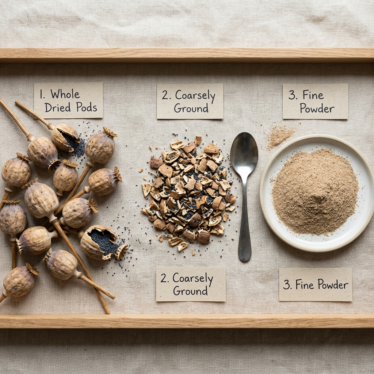
How to Evaluate Quality in Natural Poppy Pods Powder
Buying premium poppy pod powder means knowing how to distinguish a well-processed product from a substandard one before you commit capital. These are the checkpoints that matter.
Color
High-quality dried poppy pod powder sits in a consistent muted range — from pale beige to grey-green to muted tan, depending on variety and origin. Strong yellowing is a signal of degraded starting material. White patches or dark discoloration indicate moisture damage during drying or storage. Look for uniform, even color across the batch.
Texture and Grind Consistency
Quality powder flows freely and has consistent particle size throughout. Clumping is the clearest indicator of excess moisture — either in the raw pods before milling or introduced during storage and packaging. Visible unmilled chunks mixed into fine powder signal poor processing.
Aroma
Natural poppy pod powder has a mild, earthy, botanical smell. Clean and dry. A sharp chemical odor is a red flag, as is a complete absence of any botanical character. Musty or sour smells indicate moisture damage at some point in the supply chain.
Sourcing Transparency
The best producers clearly disclose where their pods are grown, whether organic practices are used, and what processing protocols they follow. Ask about country of origin, harvest method, and batch-level documentation. Suppliers who can answer these questions directly demonstrate the accountability that should be standard in any botanical product category.
For buyers prioritizing certified clean sourcing, the USDA National Organic Program sets the benchmark for organically certified agricultural products. The American Herbal Products Association (AHPA) also sets industry standards for botanical product labeling and trade practices, and research-grounded guidance from the American Botanical Council supports best practices for botanical handling. Suppliers aligned with these standards can typically provide supporting documentation.
Packaging Integrity
Resealable, opaque, moisture-resistant packaging preserves botanical powder quality across transit and storage. Transparent, poorly sealed packaging that allows air and light exposure is a practical shortcoming that directly affects product longevity.
Natural Poppy Pods Powder vs. Whole Pods: Which Format Is Right for You?
This is the most common decision point for buyers entering the market. Neither format is universally superior — the right choice depends entirely on your use case.
Choose Natural Poppy Pod Powder When:
- You need a process-ready format with no additional preparation
- Storage space is a constraint — powder is significantly more compact than whole pods
- You’re incorporating the material into a formulation, blend, or product line
- Consistent particle size across a full batch is required
- You’re buying at bulk volume and want a ready-to-use botanical input
Choose Whole or Dried Pods When:
- Visual presentation is the primary goal — wreaths, dried floral arrangements, decorative display
- You want to process the pods yourself to your own specifications
- You’re conducting botanical study and need the pod in its intact natural form
Premium Poppy Pods carries the full range of formats to support both needs:
- Fresh, Untreated Poppy Pods — whole pods in their most natural state
- Dried Poppy Pod Heads — dried, ready-to-use whole pods for craft and display
- Dried Papaver Poppy Pods (Grade A) — premium-grade dried pods for buyers with exacting standards
- Poppy Powder — fully processed, milled pod powder at multiple volume tiers
Many wholesale buyers source both formats from the same supplier — powder for production, whole pods for display or secondary product lines. Consolidating sourcing keeps logistics manageable and ensures quality consistency across everything you order.
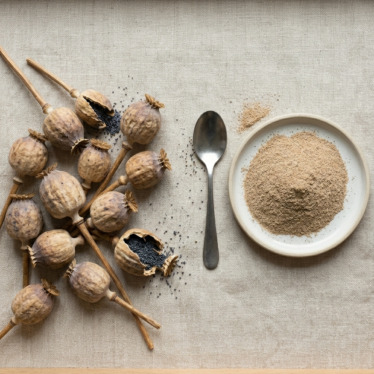
Organic Poppy Pod Powder: What It Means and Why It Matters
Organic poppy pod powder comes from Papaver somniferum plants grown without synthetic pesticides, herbicides, or chemical fertilizers. For buyers prioritizing clean, traceable sourcing — particularly those sourcing for product formulation, resale, or wellness applications — organic certification provides an additional layer of assurance beyond standard supplier claims.
The practical difference between organic and conventional poppy pod powder comes down to what isn’t in the product: no synthetic chemical residues from agricultural inputs, no contamination from non-certified growing environments. For buyers where input purity is a non-negotiable, this distinction matters significantly.
When evaluating an organic claim, look for:
- Documentation from a recognized certification body aligned with USDA NOP or equivalent standards
- Transparent disclosure of the growing region and farm practices
- Batch-level traceability that connects the certified growing claim to the specific product you receive
Brands that make this information readily available reflect the accountability standard that should be expected across all botanical product categories.
Bulk Poppy Pods Powder: What Every High-Volume Buyer Should Know
Buying in bulk amplifies both the upside and the risk of your supplier choice. More capital committed, larger storage requirements, and greater operational dependence on consistent quality. The evaluation stakes are higher — and the due diligence needed before committing reflects that.
Visible, Tiered Pricing
A legitimate bulk supplier shows clear pricing at different volume levels. Vague “contact us for pricing” setups with no published tiers waste your time and raise questions about operational consistency. The Poppy Powder product page at Premium Poppy Pods shows current pricing clearly from entry-level through full wholesale — no ambiguity.
Packaging Standards
Bulk powder should arrive in sealed, moisture-resistant packaging appropriate for the order size. Ask explicitly how the product is packed for transit before committing. Poor packaging can compromise an entire purchase regardless of how good the powder quality is.
Stock Reliability
A supplier that frequently goes out of stock or restocks unpredictably forces your operation to absorb that risk. Reliable inventory across core products is a basic standard for bulk sourcing relationships.
Communication Quality
Test responsiveness before you commit capital. A team that responds clearly and quickly pre-sale tends to handle post-sale issues the same way. Slow or vague pre-sale communication is a reliable predictor of post-sale experience.
Batch Consistency Over Time
A strong single sample means less than many buyers assume. What matters is whether quality holds across batches over time — multiple orders across months, not a single positive experience. Ask suppliers how they maintain consistency: sourcing relationships, processing controls, and quality documentation are all relevant questions.
For a comprehensive deep dive into bulk buying strategy — including shipping logistics and adulteration risks — the bulk poppy pods powder buyer’s guide covers this topic in full.
How to Choose a Supplier for Premium Poppy Pods Powder
Not all suppliers are equal. These are the traits that separate reliable botanical sources from the rest.
Transparent sourcing. A good supplier tells you where their product comes from, how it’s processed, and what quality controls are in place. Vague answers about origin or growing practices are a warning sign worth taking seriously.
Real product photography. Suppliers confident in their product show you what you’re actually buying — real powder, real packaging, real product shots. Generic stock imagery tells you nothing about what will arrive.
Responsive communication. Pre-sale responsiveness is a reliable proxy for post-sale experience. Test it before placing a significant order.
Consistent stock. Bulk buyers need supply they can count on. Frequent stockouts signal supply chain instability.
Specialist knowledge. General marketplace sellers with broad product catalogs carry less accountability for any individual botanical category. Specialist suppliers — those whose entire operation is built around a specific product type — bring deeper sourcing relationships, more reliable quality controls, and stronger product knowledge.
No adulteration. Mixing lower-value powders into premium products is a documented issue in the bulk botanical market. Work only with suppliers who are transparent about their inputs and can provide documentation on request.
The FAQ page at Premium Poppy Pods answers the most common pre-purchase questions about product quality, selection, and ordering. It’s useful reading before reaching out directly.
For a broader review of what distinguishes trustworthy botanical vendors, the poppy powder botanical guide covers sourcing transparency and quality evaluation in detail.
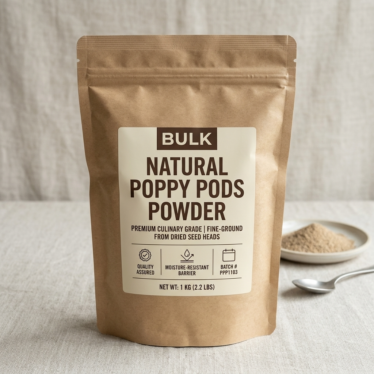
Storage Guidelines for Natural Poppy Pod Powder
Buying quality powder only pays off if you store it correctly. Moisture, heat, light, and oxygen are the four primary threats to dried botanical powder shelf life.
Follow these fundamentals:
| Factor | Guideline |
|---|---|
| Temperature | Store below 70°F (21°C). Heat degrades botanical compounds and shortens shelf life. |
| Humidity | Maintain relative humidity under 60%. Moisture is the primary cause of clumping and mold. |
| Light | UV exposure degrades plant-based materials over time. Use opaque containers or store away from direct light. |
| Sealing | Reseal containers firmly after every use to limit oxygen exposure. |
| Elevation | Keep containers off concrete floors — ground moisture can migrate into packaging. |
| Rotation | Use older inventory first. First in, first out keeps stock quality consistent. |
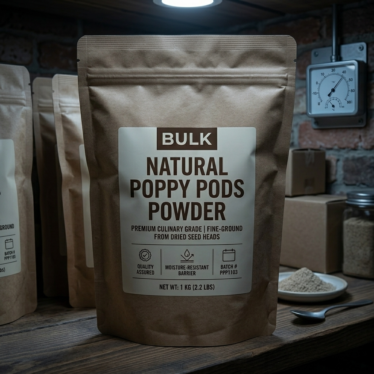
Under proper conditions, high-quality dried poppy pod powder maintains its character well beyond six months. With consistently controlled storage, shelf life extends significantly beyond that window.
Check packaging integrity before purchase, too. Signs of damage, compromised seals, or moisture staining on exterior packaging signal poor storage upstream in the supply chain — a problem that no amount of careful home storage will fully correct.
Legal Considerations: What Every Buyer Should Know
This section deserves careful attention. The legal status of poppy pods and poppy powder varies significantly by country, state, and sometimes by municipality. Getting this wrong carries serious consequences.
In the United States, Papaver somniferum is legal to grow for ornamental and agricultural purposes. However, extracting or concentrating controlled alkaloids from the plant is a federal crime under the Controlled Substances Act. For the official regulatory framework, see the DEA’s overview of the Controlled Substances Act. Dried pods sold for decorative use occupy a legal gray area. The key distinction centers on intent — material marketed for floral arrangements and botanical study has historically been treated differently than material marketed for consumption. That said, this area involves ongoing legal ambiguity and individual cases can vary.
In the United Kingdom, growing P. somniferum for ornamental purposes is not in itself prohibited, but possession with intent to produce controlled substances is. Regulations have evolved over time and current official guidance should be consulted directly.
In other jurisdictions — Australia, Canada, the EU — distinct regulatory frameworks apply. Licensing systems for pharmaceutical production operate separately from ornamental cultivation rules, but the boundaries are jurisdiction-specific.
The bottom line: Always verify current local laws before purchasing, transporting, or using any poppy-derived product. No product guide, vendor description, or marketing material substitutes for independent legal review in your specific region. A responsible supplier will support your due diligence on this — not discourage it.
Comparing Related Botanical Formats: A Quick Reference
Buyers frequently encounter several related products when researching this category. Understanding how they differ helps avoid confusion and ensures you order what you actually need.
| Product Format | Source Material | Primary Use Cases |
|---|---|---|
| Natural Poppy Pods Powder | Ground dried pod capsules | Botanical craft, formulation, research |
| Poppy Seeds | Seeds extracted from pods | Culinary use |
| Dried Whole Poppy Pods | Intact dried capsules | Decorative, floral, botanical study |
| Poppy Seed Oil | Cold-pressed seeds | Culinary, cosmetic applications |
| Dried Poppy Flowers | Dried bloom petals | Floral arrangement |
You can compare available formats and pricing side by side at the full Premium Poppy Pods shop, or go directly to the Poppy Powder product page for current bulk pricing tiers.
For documented compositional research on the pod material, you can search [peer-reviewed studies on Papaver somniferum via PubMed](https://pubmed.ncb
