
- Your cart is empty
- Continue shopping
-
sales@primiumpoppypods.com
- Posted on
- Categories:Uncategorized
- 0 comments
Decorative Dried Flowers: The Ultimate Guide to Styling, Sourcing, Decorating & Care
Fresh flowers die in seven days. You spend $40 on a bouquet, watch it wilt within a week, and toss it in the bin — repeating the cycle month after month. Decorative dried flowers end that cycle permanently. They hold their color, shape, and structure for 1 to 3 years with zero water, zero refrigeration, and zero replacement costs.
This is not a passing trend. The global dried flower market was valued at over $700 million in 2023 and continues to expand as designers, event planners, and homeowners shift toward low-maintenance, sustainable décor. Decorative dried flowers deliver the natural texture of real botanicals without the fragility of fresh cut stems.
Here is your roadmap. By the end of this guide, you will know:
- What decorative dried flowers are and why they beat fresh blooms
- The four core bloom types and the 4-part styling formula professionals use
- A repeatable 5-step arrangement process and a room-by-room decorating plan
- How to source, care for, and craft with premium dried flowers
- The three mistakes that ruin most home arrangements — and how to skip them
What Are Decorative Dried Flowers?
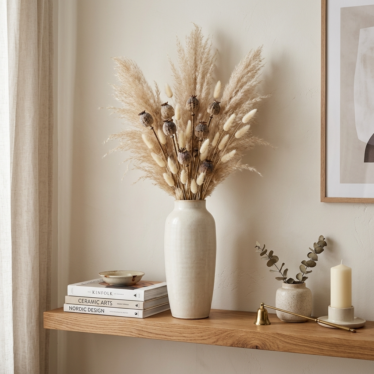
Decorative dried flowers are natural botanicals preserved through controlled drying — air-drying, silica gel, or freeze-drying — to retain their form and color long after harvest. They are not plastic imitations, and they are not fresh cut stems on borrowed time. They require no water and no refrigeration, yet carry genuine texture, scent, and organic variation that fakes never replicate.
The category is broad. It includes seed heads like poppy pods, grasses like pampas and bunny tails, everlasting blooms like statice and strawflower, and structural stems like eucalyptus and lunaria. Each brings a distinct role to an arrangement — height, texture, color, or focal weight.
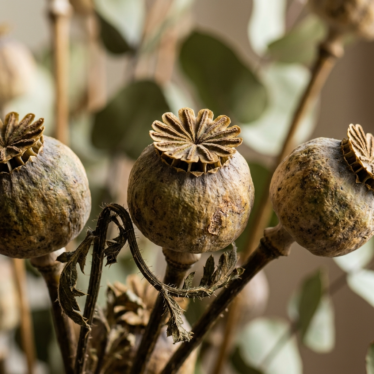
Poppy pods, harvested from Papaver somniferum, remain among the most sought-after decorative dried elements. Their sculptural, orb-like heads add architectural interest that no other dried stem replicates. Sold strictly for ornamental use, they anchor arrangements with a bold, modern silhouette.
Who this is for: homeowners tired of replacing bouquets, event planners who need reusable décor, and crafters building durable, sellable pieces. The difference between a display that looks intentional and one that looks like a dusty afterthought comes down to two things — sourcing and technique. Both are covered below.
Why Decorative Dried Flowers Outperform Fresh Blooms
Fresh flowers demand constant replacement — a recurring cost most people underestimate. A weekly bouquet habit runs $1,500 to $2,000 per year. Decorative dried flowers eliminate that spend after a single purchase.
Here is the direct comparison:
- Longevity: Fresh flowers last 5 to 10 days. Quality dried flowers last 1 to 3 years.
- Maintenance: Fresh flowers need daily water changes and trimming. Dried flowers need occasional dusting — nothing more.
- Cost over time: One dried arrangement replaces roughly 50 fresh bouquets across three years.
- Sustainability: No cold-chain shipping, no floral foam, no weekly waste.
- Allergen profile: Most dried flowers carry minimal pollen, making them a safer choice for allergy-sensitive homes.
Dried flowers are not a compromise on beauty — they are a compromise on waste. The visual payoff stays; the recurring cost disappears.
Key takeaway: For longevity, cost, and sustainability, dried flowers win on every measurable count.
![Fresh flower bouquet compared to a long-lasting decorative dried flower arrangement."]](https://primiumpoppypods.com/wp-content/uploads/2026/07/image-21-374x374.png)
The Core Types of Decorative Dried Blooms
Not all dried flowers serve the same purpose. Choosing the wrong type for your setting produces flat, lifeless displays. Match the bloom to the job — and every type below has one.
Structural Focal Elements
Focal stems carry the visual weight of an arrangement. Poppy pods, protea, and lotus pods fall here — bold, sculptural, and impossible to ignore. Explore the full range of decorative dried blooms built specifically to anchor modern displays.
Texture and Movement
Pampas grass, bunny tails, and reed create softness and motion. They fill negative space and add the airy, feathered quality that defines contemporary dried arrangements.
Color Retainers
Statice, strawflower, and globe amaranth hold vivid color for years. These deliver the pops of red, purple, and gold that keep a neutral arrangement from reading as monochrome.
Linear Accents
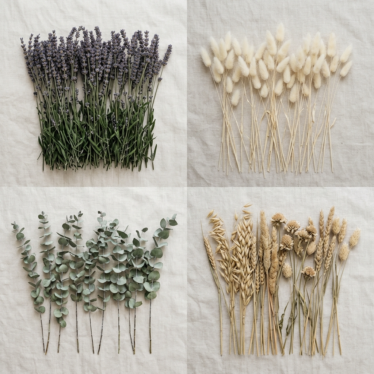
Wheat, lavender, and eucalyptus provide vertical lines and delicate detail. They bridge focal elements and filler, giving the eye a path to follow.
Key takeaway: The best arrangements combine all four categories — one focal type, one texture type, one color retainer, and one linear accent. That formula produces balanced, professional results every time. Here is exactly how to apply it.
The Universal 4-Part Styling Formula
Most home displays look amateur for one reason — they combine random stems with no structural logic. Professional florists do not guess. They build every arrangement from four functional categories, and so should you.
Here is the four-part formula:
- One focal element — the visual anchor. Poppy pods, lotus heads, or protea.
- One texture element — movement and softness. Pampas grass, bunny tails, or reed.
- One color retainer — lasting pigment. Statice, strawflower, or globe amaranth.
- One linear accent — vertical direction. Wheat, lavender, or eucalyptus.
Combine one stem from each category and the arrangement balances itself. This is not a stylistic preference — it is the structural rule behind nearly every high-end dried flower arrangement you have admired and could not replicate.
Two proportion rules lock it in:
- Height: The arrangement should stand 1.5 to 2 times the height of its vessel.
- Density: Fill roughly 70% of the visual space — the remaining 30% of negative space is what makes dried arrangements read as modern rather than crowded.
Master this formula once and it scales to every room in your home.
How to Style Decorative Dried Flower Arrangements: A 5-Step Process
Most home arrangements fail for one reason — they crowd stems into a vase with no structural plan. The result looks like a bundle, not a design. Follow this exact sequence instead.
Step 1: Choose the Vessel First
The container dictates proportion. A tall, narrow vase suits linear stems like wheat and lavender. A wide, low bowl suits mounded arrangements of grasses and pods. Select the vessel before you select the stems — never the reverse.
Step 2: Build the Structural Base
Start with your tallest linear stems to establish height. The rule: the arrangement should stand 1.5 to 2 times the height of the vessel for visual balance.
Step 3: Add Focal Weight
Place focal elements — poppy pods, protea, or lotus — slightly off-center and at varying depths. Clustering them creates a natural anchor point that draws the eye.
Step 4: Fill with Texture
Weave grasses and feathered elements around the focal points. This fills gaps and softens hard lines. Leave breathing room — overcrowding kills the airy quality that makes dried arrangements modern.
Step 5: Finish with Color and Detail
Tuck in color retainers and fine accents last. These are the finishing strokes — the details that separate a designed arrangement from a random bunch.
Room-by-Room Decorating Guide
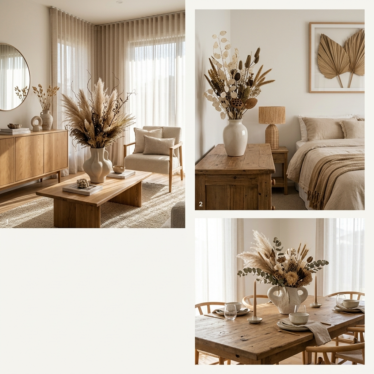
Dried flowers are not limited to a single vase on a mantel. Their versatility spans entire interiors — and each room calls for a different approach. Well-placed dried flower decorations transform a space without a single drop of water.
The Living Room: Build a Statement That Commands the Space
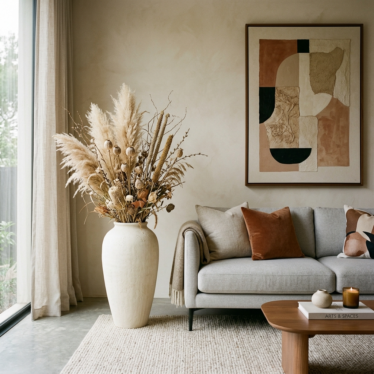
Undersized arrangements vanish in living rooms. A delicate 12-inch cluster in an open 200-square-foot space simply disappears against the scale of a sofa, coffee table, and media wall. The living room demands presence — treat it as your anchor room and scale up.
What to use: Reach for a floor vase or large ceramic vessel at least 14 inches tall. Pair tall pampas grass for volume with poppy pods as the sculptural focal point, dried eucalyptus for linear direction, and a few strawflower stems for controlled color.
Where to place it:
- Floor corner beside the sofa — a tall arrangement fills dead vertical space and frames the seating area.
- Coffee table center — keep this low and wide, under 10 inches, so it never blocks sightlines.
- Mantel or media console — a horizontal, spread arrangement balances the fixture beneath it.
For the living room, bigger is not risky — bigger is correct.
The Bedroom: Soft, Low-Profile Texture That Calms the Space
The bedroom problem is the opposite of the living room. Bold statement arrangements overwhelm a space built for rest. Restraint wins here — soft texture, muted tone, low height.
What to use: Choose small vessels under 8 inches and keep the palette gentle. Lavender delivers muted color and a subtle, lasting scent. Bunny tails add soft movement. A few slim wheat stems provide quiet vertical structure.
Where to place it:
- Nightstand — a compact cluster of lavender and bunny tails, kept low so it never crowds a lamp.
- Dresser top — a slightly wider arrangement works, but keep it under 10 inches tall.
- Window ledge — a single slim bud vase with three or four stems reinforces calm.
Natural dried flowers suit the bedroom precisely because they carry organic texture without the fragility or pollen of fresh cut stems — a real advantage for allergy-sensitive sleepers.
The Entryway: Set the Tone in the First Three Seconds
You get three seconds to make a first impression, and the entryway makes it. A bare console signals neglect before a guest reaches the living room. This is the highest-leverage styling zone in the home — and the most frequently overlooked.
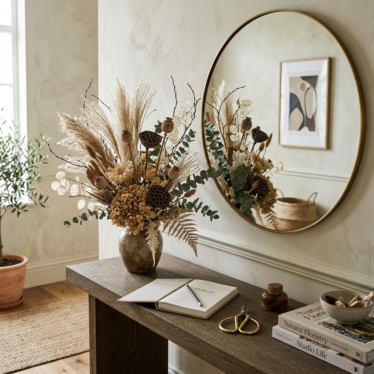
What to use: A console-height vase between 10 and 14 inches. Build with bold focal blooms — poppy pods or lotus heads — and strong vertical lines from wheat or eucalyptus.
Where to place it:
- Console table — the primary display. Center it, or offset it if you have wall art or a mirror to balance.
- Wall-mounted shelf — a compact arrangement adds height in narrow entryways.
- Stair landing — a taller vase draws the eye upward and connects the entry to the rest of the home.
The entryway is not the place to experiment — it is the place to execute a formula that works.
The Home Office: Warmth Without the Upkeep
The home office has a maintenance problem fresh flowers cannot solve. Nobody wants to change vase water or watch a bouquet wilt mid-deadline. Yet a bare desk feels sterile. Dried flowers close that gap — organic warmth with zero upkeep.
What to use: Keep it compact and grounding. Wheat and dried grasses bring earthy warmth in a small vessel under 9 inches. Add a poppy pod or two for a sculptural focal point that photographs well on video calls.
Where to place it:
- Desk corner — a small arrangement in a solid vessel adds warmth without eating work surface.
- Bookshelf — tuck a slim arrangement between books to break up hard edges.
- Windowsill — a low display softens the workspace without blocking light or screen glare.
Because dried stems need no water and tolerate neglect, they suit the one room where daily maintenance is a non-starter. A quality eco-friendly dried flowers arrangement holds its look for years.
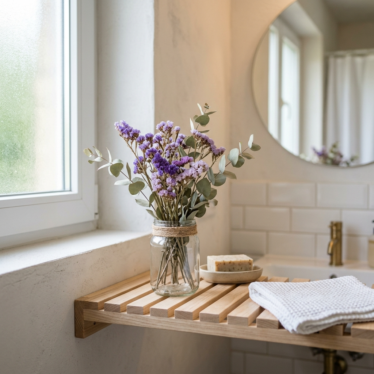
Bathroom & Kitchen: The High-Humidity Exception
Most guides tell you to avoid dried flowers in bathrooms and kitchens entirely. That advice is half wrong — the real issue is not the room, it is humidity control and stem selection.
What to use: Choose humidity-tolerant varieties. Preserved eucalyptus and dried statice hold up better than delicate grasses in damp air. Use small vessels and keep arrangements away from direct steam.
The humidity rule: Keep the space below 60% humidity for arrangements to survive long-term. Run an exhaust fan during showers and cooking. In a well-ventilated bathroom, a small jar of dried statice adds a spa-like detail fresh flowers could never sustain.
Seasonal & Whole-Home Cohesion
Individual room arrangements can still feel disconnected. The fix is a repeating thread — one stem type or color tone carried across every space to tie the whole home together.
Here is how to build cohesion:
- Repeat one signature stem — if poppy pods anchor your living room, echo a single pod in the entryway and office.
- Hold a consistent palette — pick two or three tones (wheat, cream, and deep red, for example) and stay inside that range home-wide.
- Rotate seasonally — swap warm ambers and reds in autumn for pale neutrals and soft greens in spring, keeping your base stems and changing only the accents.
For styling multiple rooms or an entire property at once, wholesale dried flowers deliver the volume needed at reduced per-stem cost — the practical route when you need matching stems across five rooms rather than one.
Common Styling Mistakes to Avoid
Even with the right stems, three mistakes undo good arrangements fast. Name them now and never repeat them.
- Overcrowding the vessel — stuffing every stem in kills the negative space that makes dried arrangements modern. Fill 70%, not 100%.
- Ignoring proportion — an arrangement shorter than its vase looks stunted; one over twice the vase height looks top-heavy. Stay in the 1.5-to-2x range.
- Placing arrangements in direct sunlight — UV exposure fades dried blooms within months. Bright, indirect light preserves color for years.
Avoid these three and your arrangements will hold both their structure and their color well past the two-year mark.
Natural & Eco-Friendly: The Sustainability Advantage
Fresh flower production carries a heavy footprint. Cut flowers are flown across continents in refrigerated cargo, wrapped in single-use plastic, and arranged with non-biodegradable floral foam. That is not sustainable décor — it is disposable décor with an expensive carbon bill.
Natural dried flowers reverse that equation. They are harvested, dried, and shipped without cold-chain logistics. A single arrangement can last three years, cutting the packaging and transport waste tied to weekly bouquet replacements by roughly 95%.
For buyers who prioritize environmental impact, eco-friendly dried flowers offer a fully biodegradable end-of-life. When an arrangement finally fades, it composts — it does not sit in a landfill like plastic stems.
Sustainability is not a marketing label here. It is a measurable difference in waste, transport emissions, and product lifespan.
Decorative Dried Flowers for Crafts & DIY Projects
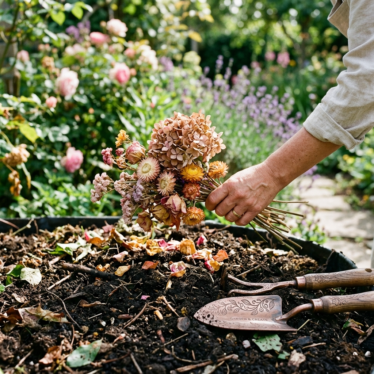
Beyond vases, dried flowers open a wide creative field. Crafters rely on them for projects fresh flowers cannot support — pressed art, resin work, wreaths, and more. A dedicated supply of dried flowers for crafts gives makers the raw material for durable, sellable pieces.
Here are the highest-value applications:
- Wreaths: Dried grasses and pods build seasonal wreaths that last years without wilting.
- Resin art: Preserved petals embedded in resin create jewelry, coasters, and keepsakes.
- Pressed flower framing: Flat blooms like statice press cleanly for wall art and stationery.
- Candle embedding: Dried petals set into wax add organic detail to handmade candles.
- Gift wrapping: A single dried stem elevates plain kraft paper into a designed presentation.
For anyone selling handmade goods, dried flowers offer a critical advantage — the finished product does not spoil. A resin coaster with embedded poppy petals looks identical in year three as it did on day one.
Where to Source Premium Decorative Dried Flowers
Quality varies wildly across suppliers. Cheap dried flowers arrive crushed, faded, or artificially dyed with colors that bleed. Premium blooms arrive intact, vibrant, and ready to display. The difference is visible the moment the box opens.
The 5-Point Buying Checklist
Use this checklist when evaluating any supplier. Poor stock fails on at least one point — premium stock passes all five.
- Intact structure: Heads and stems should be whole, with no cracks or breakage.
- Natural color depth: Genuine dried flowers hold rich, even tone — not the flat, uniform shade of over-dyed stock.
- Firm texture: Quality pods and stems feel sturdy, not brittle or dehydrated.
- Reputable sourcing: The seller provides clear product descriptions and honest origin details.
- Secure packaging: Dried flowers are fragile in transit. Protective packing is non-negotiable.
For homeowners and single-project buyers, a standard retail order works well. For florists, event planners, and craft businesses ordering in volume, wholesale dried flowers deliver the same premium quality at bulk pricing — cutting per-stem cost significantly on large orders.
Poppy pods deserve a specific note on legality. In the United States, they are sold strictly for ornamental and decorative use — never for consumption or extraction. Always confirm local regulations before purchase, and buy only from suppliers who state this clearly.
Still weighing a purchase? The detailed FAQ page answers the most common sourcing and quality questions in depth.
How to Care for Decorative Dried Flowers
Dried flowers are low-maintenance — not no-maintenance. Four simple habits stretch their lifespan from one year to three.
Keep Them Out of Direct Sunlight
UV exposure is the primary cause of color fade. Direct sun bleaches dried blooms within months. Place arrangements in bright but indirect light for maximum color retention.
Control Humidity
Excess moisture reintroduces the exact problem drying solves. High humidity causes mold and drooping. Keep arrangements in spaces below 60% humidity. Bathrooms and kitchens require the most caution.
Dust Gently
Dried flowers collect dust over time. Use a soft brush, a hairdryer on the cool setting, or a can of compressed air. Never wipe with a damp cloth — moisture damages the structure.
Handle with Care
Dried stems grow more brittle with age. Move arrangements as a whole unit rather than adjusting individual stems repeatedly.
Follow these four practices and a quality arrangement will hold its beauty well past the two-year mark.
The Design Trends Driving Dried Flower Demand
The dried flower resurgence is not accidental. Leading design authorities point to the same drivers again and again. Architectural Digest has repeatedly featured dried and preserved botanicals in modern interior spreads, and the Royal Horticultural Society (RHS) documents the growing practice of cultivating flowers specifically for drying.
Three trends dominate right now:
- Neutral, textural palettes: Wheat, pampas, and natural pods align with the beige-and-earth-tone movement in modern interiors.
- Bold sculptural focal pieces: Poppy pods and lotus heads satisfy the demand for statement botanicals with architectural presence.
- Slow, sustainable living: Consumers increasingly reject disposable décor — and dried flowers fit the low-waste ethos precisely.
These are not fleeting fads. They reflect a durable shift in how people decorate — toward pieces that last, waste less, and require little upkeep.
Frequently Asked Questions
How long do decorative dried flowers last?
Quality decorative dried flowers last 1 to 3 years when kept out of direct sunlight and away from high humidity. Premium blooms with intact structure and natural coloring retain their appearance longest. Regular gentle dusting and careful handling can extend their lifespan well past the two-year mark.
Are decorative dried flowers better than fresh flowers?
For longevity, cost, and sustainability, dried flowers outperform fresh ones. Fresh flowers last 5 to 10 days and need constant replacement, while dried flowers last years with only occasional dusting. One dried arrangement can replace roughly 50 fresh bouquets over three years, eliminating recurring cost and weekly waste.
How do you clean decorative dried flowers?
Clean dried flowers with a soft brush, a hairdryer set to cool, or a can of compressed air to remove dust gently. Never use water or a damp cloth, since moisture damages the structure and can cause mold. Regular light dusting keeps arrangements looking fresh for years.
Are poppy pods legal to buy for decoration?
In the United States, poppy pods are sold strictly for ornamental and decorative use — not for consumption or extraction. They add sculptural, architectural interest to dried arrangements. Always confirm local regulations before purchase and buy only from reputable suppliers who state their ornamental-use policy clearly.
Why are poppy pods popular for decorative arrangements?
Poppy pods, harvested from Papaver somniferum, deliver a bold, orb-like silhouette that anchors an arrangement with modern architectural weight. They provide the sculptural focal point most other dried stems cannot. Cluster them slightly off-center at varying depths to create a natural anchor that draws the eye.
What types of dried flowers are best for beginners?
Beginners should start with sturdy, forgiving varieties like pampas grass, bunny tails, wheat, and poppy pods. These hold their shape well, resist breakage, and combine easily into balanced arrangements. Pairing one focal element, one texture element, and one color accent produces professional-looking results with minimal experience.
How do I make dried flower arrangements look professional?
Follow a four-part formula: one focal element, one texture element, one color retainer, and one linear accent. Choose the vessel first, build height with tall stems, cluster focal blooms slightly off-center, then fill with texture and finish with color. Keep the arrangement at 1.5 to 2 times the vessel height and fill about 70% of the visual space, leaving negative space for a modern look.
Where should I place dried flowers in my home for the best effect?
Place large, tall arrangements in living rooms and entryways where scale creates impact, and keep small, low-profile arrangements in bedrooms and home offices where subtlety matters. Always position dried flowers in bright, indirect light and away from direct sunlight, which fades color within months. Match the arrangement height to 1.5 to 2 times the vessel height for balanced proportion in any room.
What dried flowers work best for interior decorating?
The most versatile decorative dried flowers for home styling are pampas grass for texture, poppy pods and lotus heads for sculptural focal points, wheat and eucalyptus for vertical lines, and statice or strawflower for lasting color. Combining one focal element, one texture element, one color retainer, and one linear accent produces balanced, professional-looking arrangements in every room.
Can you put dried flowers in a bathroom or kitchen?
Yes, but only humidity-tolerant varieties like preserved eucalyptus and dried statice, and only in spaces kept below 60% humidity. Run exhaust fans during showers or cooking and keep arrangements away from direct steam. Delicate grasses and soft blooms are more prone to mold in damp rooms, so stem selection is critical for these high-humidity spaces.
Can decorative dried flowers be used for crafts?
Yes. Dried flowers are ideal for crafts including wreaths, resin art, pressed flower framing, candle embedding, and gift decoration. Because they do not spoil, finished handmade pieces stay identical for years — a major advantage for makers who sell their work.
Are dried flowers eco-friendly?
Dried flowers are among the most sustainable décor choices available. Fresh cut flowers are flown across continents in refrigerated cargo, wrapped in single-use plastic, and arranged with non-biodegradable foam. Eco-friendly dried flowers ship without cold-chain logistics and last up to three years, cutting packaging and transport waste by roughly 95%, and they compost rather than sit in a landfill.
What is the difference between natural and dyed dried flowers?
Natural dried flowers hold rich, even, organic color with subtle variation between stems, while dyed flowers show a flat, uniform shade that can bleed and looks artificial. Natural dried flowers also biodegrade cleanly at end of life. Read every product description carefully before buying, since some suppliers artificially dye stock without stating it clearly.
How do I choose high-quality dried flowers?
Use a five-point checklist: intact structure with whole undamaged heads and stems, rich and even natural color rather than a flat over-dyed shade, firm sturdy texture instead of brittle stems, reputable sourcing with clear product descriptions, and secure protective packaging built for fragile transit. Premium stock passes all five points.
Where can I buy wholesale dried flowers?
You can buy wholesale dried flowers from online marketplaces, direct importers, trade shows, and local wholesale florists. The most popular options include:
- Online marketplaces like Etsy Wholesale, Faire, Alibaba, and Afloral, which let you compare hundreds of sellers in one place.
- Direct importers who bring stems in from Holland, Colombia, and India, often at the lowest prices per bunch.
- Trade shows such as regional floral or gift markets, where you can touch the product before you buy.
- Local flower wholesalers, who may carry dried stock alongside their fresh inventory.
For most creative businesses just starting out, online marketplaces are the easiest place to begin!
What is the minimum order quantity for wholesale dried flowers?
Minimum order quantities typically range from $100 to $500, or 10 to 50 bunches, depending on the supplier. Online platforms like Faire often have low minimums around $100, which is perfect if you’re testing new products. Direct importers usually require larger orders, sometimes $500 or more, because they ship in bulk cartons. Always check the “MOQ” listed on a supplier’s page before you fall in love with a product!
How much do wholesale dried flowers cost?
Wholesale dried flowers usually cost between $3 and $25 per bunch, depending on the variety and rarity. Here’s a quick guide:
- Common stems (baby’s breath, wheat, ruscus): $3–$8 per bunch
- Popular favorites (pampas grass, bunny tails, statice): $8–$15 per bunch
- Premium or rare stems (preserved roses, large pampas plumes): $15–$25+ per bunch
Buying in larger quantities almost always lowers your per-bunch price, so it pays to plan ahead!
What should I look for in high-quality dried flowers?
Look for vibrant color, intact stems, and minimal shedding. High-quality dried flowers hold their shape and shade for months, while poor-quality stock fades fast or crumbles the moment you unwrap it. Here are my favorite things to check:
- Color consistency across the whole bunch, with no dull or brown patches (unless that’s the natural tone!)
- Sturdy stems that don’t snap under gentle pressure
- Low shedding, especially with grasses like pampas
- Proper drying, meaning no mold, mildew, or damp smell
When possible, order a small sample bunch first so you know exactly what you’re getting.
How can I vet a wholesale dried flower supplier?
Vet a supplier by checking reviews, requesting samples, and asking about their sourcing. A trustworthy supplier is happy to answer your questions! Here’s what I recommend:
- Read reviews on their platform or search for independent feedback online.
- Request a sample order before committing to a large purchase.
- Ask where their flowers come from and whether they’re naturally dried or preserved.
- Confirm their return or replacement policy in case stems arrive damaged.
- Test their communication by sending a quick question and seeing how fast and helpful the reply is.
A slow or vague response early on usually signals headaches down the road.
What are the best tips for shipping wholesale dried flowers?
The best shipping tip is to order during dry, mild weather and choose suppliers who pack stems in rigid boxes. Dried flowers are delicate and easily crushed, so packaging matters just as much as the flowers themselves! Keep these tips in mind:
- Avoid humid seasons, since moisture can cause mold during transit.
- Ask about box protection, like tissue wrapping and sturdy cartons.
- Inspect your order immediately upon arrival and photograph any damage.
- Store stems upright in a cool, dry spot away from direct sunlight once they arrive.
A little planning here saves you from opening a box of sad, flattened stems.
Is it cheaper to buy dried flowers from overseas importers?
Yes, buying from overseas importers is often cheaper per stem, but you’ll need to factor in shipping, customs fees, and longer wait times. Importers in Holland and India can offer excellent prices on bulk cartons. However, the savings only make sense if you’re ordering in large volumes and can wait several weeks for delivery. For smaller businesses, a domestic wholesaler may actually cost less once shipping and duties are added in.
Can I buy wholesale dried flowers without a business license?
In many cases, yes! Platforms like Alibaba and some direct sellers allow bulk purchases without a resale certificate. However, wholesale-only distributors and trade shows often require proof of business, such as a resale license or tax ID. If you’re a hobbyist or DIY crafter, stick with open marketplaces like Etsy or Faire, which welcome buyers of all sizes.
