
- Your cart is empty
- Continue shopping
-
sales@primiumpoppypods.com
- Posted on
- Categories:Uncategorized
- 0 comments
Blue Poppy Pod Seeds: The Complete Guide to Types, Uses, Growing, Styling & Buying
Blue poppy pod seeds are the dried seed capsules and the fine blue-gray seeds harvested from poppy plants of the genus Papaver, cultivated primarily for ornamental, decorative, and horticultural application. The material combines a rigid, sculptural capsule with the slate-blue seeds contained within, positioning it as a reference-grade specimen for florists, crafters, gardeners, and botanical collectors.
This guide consolidates the complete subject into a single reference document. It examines the botanical classification of the genus, the decorative and styling applications that govern arrangement design, the cultivation sequence required for propagation, the harvesting and drying technique that preserves capsule integrity, the pairing categories that balance multi-textural compositions, the documented wellness associations of poppy-derived material, and the sourcing criteria that distinguish graded stock from low-quality material. A complete FAQ section and schema-ready JSON-LD close the guide. The structure prioritizes scannable, extractable detail for both first-time buyers and experienced horticulturists.
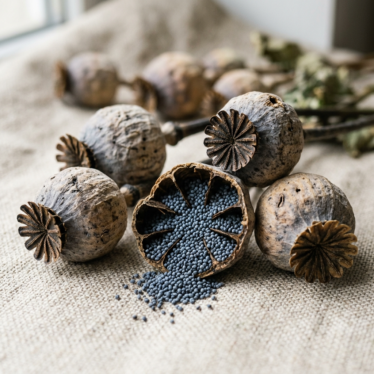
Table of Contents
- What Are Blue Poppy Pod Seeds
- Types and Botanical Classification
- Ornamental and Decorative Uses
- Decorative Styling Tips
- How to Grow Blue Poppy Pod Seeds
- Harvesting and Drying Poppy Capsules
- Pairing Blue Poppy Pod Seeds with Other Dried Botanicals
- Health and Wellness Uses
- Where to Buy Blue Poppy Pod Seeds Online
- Buying Guide: How to Choose Quality Blue Poppy Pod Seeds
- Frequently Asked Questions
- JSON-LD FAQ Schema Markup
What Are Blue Poppy Pod Seeds
Blue poppy pod seeds are the matured, dried seed capsules and the contained seeds harvested from poppy plants of the genus Papaver, cultivated primarily for decorative and horticultural purposes. The term encompasses both the rigid outer pod and the fine blue-gray seeds that develop inside the capsule.
These pods are valued for several distinct properties:
- Structural rigidity: Retain a sculptural shape for months or years, supporting long-term decorative use.
- Seed yield: Contain numerous fine seeds suitable for propagation or craft application.
- Visual distinction: Present a ribbed crown and rounded capsule that form a recognizable ornamental silhouette.
- Versatility: Support floral arrangement, wreath construction, potpourri blending, and botanical display.
It is important to distinguish blue poppy pod seeds from culinary poppy seeds sold for baking. While both originate from the poppy plant, blue poppy pod seeds are marketed for ornamental, horticultural, and collection use rather than food preparation. For a verified product listing with quantity options, consult the Blue Poppy Pod Seeds page.
Key takeaway: Blue poppy pod seeds combine a durable, sculptural seed capsule with fine blue-gray seeds, valued primarily for ornamental and horticultural application rather than culinary use.
Types and Botanical Classification
Blue poppy pod seeds belong to the genus Papaver within the family Papaveraceae, a group of flowering plants recognized for distinctive seed capsules and crepe-textured petals. Accurate classification assists buyers in selecting the correct pod type for decorative, propagation, or collection goals.
The principal classifications include:
- Papaver somniferum: The species most commonly associated with large, rounded seed pods and blue-gray seeds, prized for capsule size and sculptural form.
- Papaver rhoeas: The field poppy, producing smaller, more delicate capsules suited to compact arrangements.
- Papaver orientale: The Oriental poppy, recognized for substantial pods used in larger floral and decorative compositions.
- Heirloom and non-GMO selections: Pods propagated through natural cultivation methods, preferred by gardeners prioritizing heritage standards.
For authoritative taxonomic reference, consult the Royal Horticultural Society (RHS) and the Wikipedia entry on Papaver somniferum. Both sources document species characteristics, growth habits, and capsule morphology.
Buyers searching for Papaver somniferum pod seeds specifically should confirm that the listing identifies the species accurately, as capsule size and seed quality vary considerably between Papaver varieties. A broader selection of related capsule types is available within the poppy pods category.
Papaver Seed Pod Chart V2
The seed pod, designated the capsule, of the genus Papaver represents the matured ovary structure that governs seed maturation and dispersal. Capsule morphology, encompassing gross shape, surface vestiture, stigmatic disc configuration, and dehiscence mechanism, furnishes reliable diagnostic criteria for interspecific discrimination within the genus.
Key takeaway: Blue poppy pod seeds derive from the genus Papaver, with Papaver somniferum offering the largest, most sculptural capsules favored for decorative and collection use.
Ornamental and Decorative Uses
Blue poppy pod seeds function primarily as ornamental and decorative material, valued for structural form and natural color rather than for consumption. The dried capsules retain their shape and texture, supporting a range of design and craft applications.
The principal decorative applications include:
- Floral arrangements: Add sculptural texture and contrast alongside soft-petaled flowers such as roses, lilies, or lavender.
- Wreaths: Combine with twigs, vines, and dried botanicals to construct seasonal or year-round door wreaths.
- Table centerpieces: Anchor minimalist displays in decorative bowls or paired with candles and dried elements.
- Crafts and DIY projects: Incorporate into greeting cards, scrapbooks, and decorative jewelry for added texture.
- Potpourri: Blend with lavender, cinnamon, or rose petals to enhance both aroma and visual composition.
Additionally, the durability of dried poppy pods establishes them as a practical alternative to fresh flowers, which wilt within days. For decorative projects requiring larger or graded capsules, the Dried Papaver Poppy Pods (Grade A) and Dried Poppy Pod Heads provide complementary options suited to floral artistry and rustic décor.
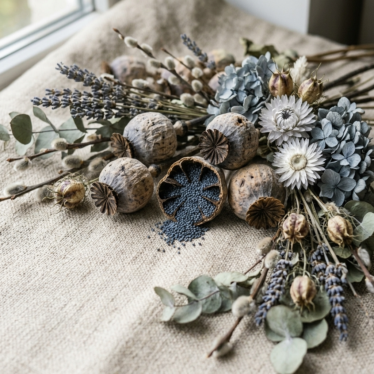
Key takeaway: Blue poppy pod seeds serve as durable, sculptural decorative material suited to floral arrangements, wreaths, centerpieces, crafts, and potpourri.
Decorative Styling Tips
Decorative styling with blue poppy pod seeds refers to the deliberate placement of the dried capsule within floral and interior compositions to establish structure, contrast, and visual rhythm. The rigid form provides contrast against soft-petaled botanicals and holds its shape across extended display periods.
Effective styling applications include the following:
- Vertical accents: Position taller pods at the rear or center of an arrangement to establish height and visual structure.
- Textural contrast: Pair the ribbed capsules against smooth-petaled flowers such as roses or ranunculus to emphasize surface variation.
- Monochrome compositions: Group multiple pods in a single vessel for a minimalist, sculptural display that highlights form over color.
- Seasonal centerpieces: Combine pods with candles, dried foliage, and neutral linens to anchor a table setting.
- Wall and door décor: Integrate pods into wreaths and hanging arrangements where durability is required.
Moreover, the neutral, slate-toned exterior of the dried capsule complements both modern and rustic interiors, which reduces the constraint of matching a fixed color palette. For projects requiring larger or more uniform capsules, the Dried Poppy Pod Heads provide a graded alternative suited to focal-point styling.

Key takeaway: Blue poppy pod seeds serve as durable structural accents in styling, providing sculptural contrast and seasonal versatility across modern and rustic settings.
How to Grow Blue Poppy Pod Seeds
Cultivation from blue poppy pod seeds involves sowing the fine seeds contained within the dried capsule to propagate new Papaver plants, provided conditions replicate the cool, well-drained environment the genus favors. Germination success depends on controlled management of soil composition, sowing depth, and moisture, as the seeds are fine and light-dependent.
The recommended cultivation sequence proceeds through the following stages:
- Soil preparation: Cultivate light, well-drained soil enriched with organic matter, maintaining a slightly acidic to neutral pH between 6.0 and 7.0.
- Surface sowing: Scatter seeds thinly across the soil surface without burying them, as light exposure supports germination.
- Moisture maintenance: Keep the medium consistently damp using a fine mist rather than heavy watering, which displaces fine seeds.
- Thinning: Space emerging seedlings to reduce competition and improve airflow once the first true leaves develop.
- Site selection: Position plants in full sun to partial shade, with shelter from strong wind that may damage developing stems.
Furthermore, cool growing temperatures and consistent moisture during the establishment phase improve overall plant vigor and capsule development. For verified taxonomic and growth guidance, consult the Royal Horticultural Society (RHS) and the Wikipedia entry on Papaver somniferum, both of which document species characteristics and cultivation requirements. Once flowering concludes, the resulting seed capsules may be harvested and dried for decorative use, completing the cultivation cycle.
For growers establishing large displays or propagation projects, the blue poppy seeds bulk option supports landscape-scale and wholesale planting volumes.
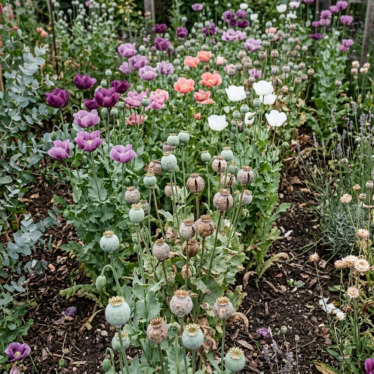
Key takeaway: Blue poppy pod seeds propagate through surface sowing in light, well-drained soil under cool, consistently moist conditions, with bulk quantities supporting larger plantings.
Harvesting and Drying Poppy Capsules
Harvesting and drying constitute the post-flowering stage in which mature seed capsules are collected and preserved for decorative or propagation use. Proper timing and drying technique determine the structural integrity, color retention, and seed viability of the finished pod.
The harvesting and drying process follows this sequence:
- Timing the harvest: Cut capsules once the flower petals have dropped and the pod has turned from green to a dry, papery tan or gray tone.
- Stem retention: Leave several inches of stem attached to support handling and display arrangement.
- Initial inspection: Discard capsules showing mold, splitting, or insect damage to maintain batch quality.
- Air drying: Suspend the capsules upside down in a dry, well-ventilated space away from direct sunlight for one to three weeks.
- Seed separation: Once fully dry, invert the capsule and shake gently to release seeds through the natural openings beneath the crown for storage or sowing.
Moreover, capsules intended for long-term decorative use should be stored in a cool, dry location to prevent reabsorption of moisture, which compromises structural rigidity. The seeds released during this stage may be retained for the next propagation cycle, completing the harvest-to-sowing sequence. For comparison with professionally graded and dried stock, the Dried Papaver Poppy Pods (Grade A) demonstrate the uniformity and finish achievable through controlled drying.
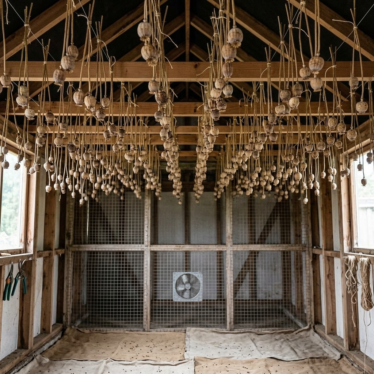
Key takeaway: Capsules harvested at full maturity and air-dried in ventilated, low-light conditions retain structural integrity, color, and seed viability for both decorative and propagation use.
Pairing Blue Poppy Pod Seeds with Other Dried Botanicals
Pairing involves combining blue poppy pod seeds with complementary dried botanicals to construct balanced, multi-textural arrangements. The selection of companion materials governs the visual rhythm, color balance, and structural contrast of the finished composition.
Effective pairing categories include the following:
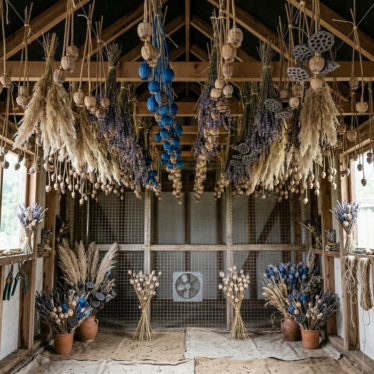
- Soft-texture companions: Pampas grass, bunny tail grass, and dried hydrangea soften the rigid form of the capsule.
- Aromatic additions: Lavender, eucalyptus, and dried rose petals contribute fragrance alongside visual contrast.
- Structural complements: Lotus pods, nigella pods, and star anise reinforce the sculptural, seed-pod theme.
- Color anchors: Wheat, ruscus, and dried foliage introduce warm or green tones that balance the slate-blue capsule.
- Seasonal accents: Cinnamon sticks and dried orange slices support autumn and winter compositions.
Additionally, balanced pairing observes proportional ratios, in which a single capsule type should not exceed roughly one-third of a mixed arrangement to preserve visual variety. For a broader range of compatible capsule types and dried materials, the poppy pods category consolidates complementary options suited to floral artistry and rustic décor.
Key takeaway: Blue poppy pod seeds pair effectively with soft, aromatic, structural, and color-anchoring botanicals, observing proportional ratios to maintain balanced visual variety.
Health and Wellness Uses
Health and wellness associations refer to the documented nutritional compounds and traditional applications of poppy-derived seeds, though the primary commercial value of blue poppy pod seeds remains ornamental and horticultural. The broader poppy category carries a documented history in herbal and culinary traditions.
Reported nutritional and traditional associations include:
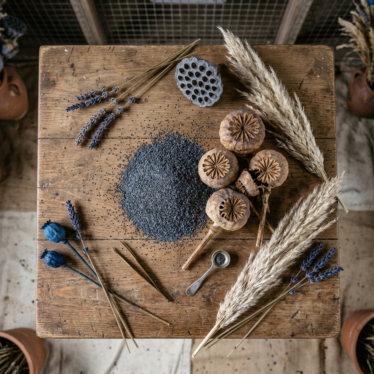
- Mineral content: Provide calcium, magnesium, iron, and phosphorus in measurable quantities.
- Dietary fiber: Contribute dietary fiber when used in culinary preparations.
- Essential fatty acids: Contain omega-6 fatty acids documented in nutritional literature.
- Traditional use: Feature in herbal preparations across Central and Eastern European cuisines.
It is important to note that blue poppy pod seeds sold for ornamental and horticultural purposes are not marketed or intended for consumption. Buyers seeking culinary or wellness applications should consult qualified nutritional or medical guidance, and should verify the intended use category of any product before purchase. For authoritative botanical and safety context, the Wikipedia entry on Papaver somniferum provides documented background on the species.
Key takeaway: While poppy seeds carry documented nutritional and traditional associations, blue poppy pod seeds sold for ornamental use are not intended for consumption and require qualified guidance for any wellness application.
Where to Buy Blue Poppy Pod Seeds Online
Purchasing blue poppy pod seeds online requires attention to product quality, species accuracy, and supplier reputation, as capsule grade and seed viability vary considerably between sources. Sourcing from a specialist supplier reduces the risk of mislabeled or low-quality material.
Key selection criteria include:
- Species verification: Confirm the listing identifies the Papaver species and pod type accurately.
- Grade assurance: Select graded pods where size, uniformity, and minimal imperfection are documented.
- Freshness: Choose recently harvested seeds, as viability declines with storage age.
- Quantity flexibility: Identify suppliers offering both single packets and bulk volumes for larger projects.
- Supplier reputation: Review product descriptions and listings to confirm specialist focus on poppy-derived botanicals.
For verified sourcing, the following resources support purchasing decisions:
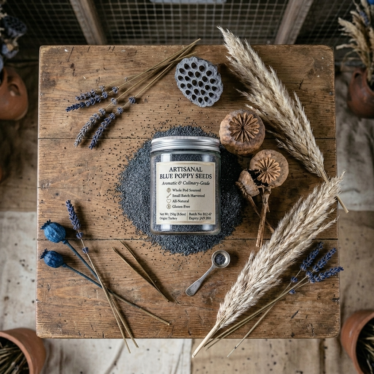
- To buy blue poppy pod seeds with documented quantity options, review the Blue Poppy Pod Seeds product page.
- For blue poppy pod seeds for sale across multiple capsule types, browse the poppy pods category.
- For large-volume orders, the blue poppy seeds bulk option supports wholesale and landscape-scale purchasing.
Moreover, purchasing poppy pod seeds online from a dedicated supplier provides access to graded stock and consistent quality standards. To begin a purchase or compare available quantities, visit primiumpoppypods.com.
Key takeaway: Quality blue poppy pod seeds should be purchased from a specialist supplier that verifies species accuracy, documents pod grade, and offers both single and bulk quantities.
Buying Guide: How to Choose Quality Blue Poppy Pod Seeds
A buying guide for blue poppy pod seeds establishes the evaluation criteria that distinguish graded, viable stock from mislabeled, immature, or low-quality material. Because quality varies considerably between sources, sourcing from a dedicated supplier reduces purchasing risk.
The selection criteria include the following:
- Species verification: Confirm the listing identifies the Papaver species and pod type accurately.
- Grade assurance: Select graded pods where size, uniformity, and minimal imperfection are documented.
- Freshness: Choose recently harvested seeds, as viability declines with storage age.
- Quantity flexibility: Identify suppliers offering both single packets and bulk volumes for scaled projects.
- Supplier specialization: Prioritize suppliers with documented focus on poppy-derived botanicals over general marketplaces.
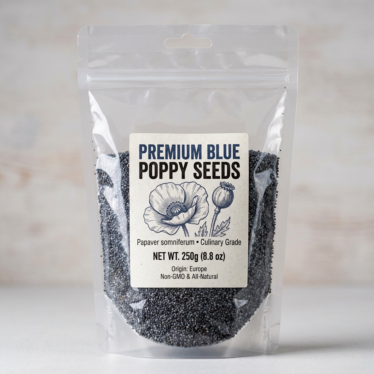
For verified sourcing, the primary product listing is available on the Blue Poppy Pod Seeds page, which documents quantity options and grade. Buyers establishing large displays or wholesale projects may select the blue poppy seeds bulk option for landscape-scale purchasing.
Key takeaway: Quality blue poppy pod seeds should be sourced from a specialist supplier that verifies species accuracy, documents pod grade, confirms freshness, and offers both single and bulk quantities.
Conclusion
Blue poppy pod seeds represent a distinctive ornamental and horticultural material, combining durable, sculptural seed capsules with fine blue-gray seeds derived from the genus Papaver. This guide has examined the botanical classification of the relevant species, the decorative and styling applications that establish contrast and structure, the surface-sowing cultivation sequence required for propagation, the harvesting and drying technique that preserves capsule integrity and seed viability, the pairing categories that balance multi-textural compositions, the documented nutritional and traditional associations of poppy seeds, and the sourcing criteria that protect against mislabeled or low-grade stock. Each section provides the reference detail required to evaluate, plant, style, or purchase this specimen with confidence.
Premium Poppy Pods supplies graded, high-quality blue poppy pod seeds alongside a complete range of poppy-derived botanicals for florists, crafters, gardeners, and collectors. To begin a styling project, propagation cycle, or botanical collection, explore the full selection and place an order at primiumpoppypods.com today.
Frequently Asked Questions
What are blue poppy pod seeds?
Blue poppy pod seeds are the dried seed capsules and the fine blue-gray seeds harvested from poppy plants of the genus Papaver, cultivated primarily for ornamental and horticultural use. The term refers to both the rigid outer capsule and the seeds contained within. They are valued for their sculptural form, durability, and versatility in floral and craft applications. Species-accurate stock is available through the Blue Poppy Pod Seeds listing.
What types of poppy produce blue poppy pod seeds?
Blue poppy pod seeds derive from the genus Papaver within the family Papaveraceae. Papaver somniferum produces large, rounded capsules with blue-gray seeds, Papaver rhoeas produces smaller delicate capsules, and Papaver orientale produces substantial pods used in larger compositions. Heirloom and non-GMO selections are also available for gardeners prioritizing heritage standards.
How do you grow blue poppy pod seeds?
Blue poppy pod seeds grow best when surface-sown into light, well-drained soil with a slightly acidic to neutral pH between 6.0 and 7.0. Seeds should be scattered thinly without burying them, as light exposure supports germination. Consistent moisture, applied through a fine mist, and a position in full sun to partial shade improve establishment. A broader range of related capsule types is available within the poppy pods category.
How long do blue poppy pod seeds take to germinate?
Blue poppy pod seeds typically germinate within one to three weeks under cool, consistently moist conditions. Germination requires light exposure, so seeds must remain uncovered on the soil surface. Seedling development proceeds gradually, and thinning should occur once the first true leaves emerge. Warmer or drier conditions slow germination and reduce overall success rates.
What are the decorative uses of blue poppy pod seeds?
Blue poppy pod seeds function primarily as ornamental material, valued for the sculptural silhouette of the dried capsule and its resistance to wilting. Common applications include floral arrangements for textural contrast, wreaths combined with twigs and dried botanicals, centerpieces in bowls or paired with candles, and crafts or potpourri that add structure to cards, jewelry, and aromatic blends.
When and how should poppy capsules be harvested and dried?
Poppy capsules should be harvested once the flower petals have dropped and the pod turns from green to a dry, papery tan or gray tone. Several inches of stem should remain attached to support handling and arrangement. The capsules should then be air-dried upside down in a dry, ventilated space away from direct sunlight for one to three weeks. Once fully dry, the capsule may be inverted and shaken gently to release seeds for storage or sowing.
What dried botanicals pair well with blue poppy pod seeds?
Blue poppy pod seeds pair effectively with soft-texture companions such as pampas grass and dried hydrangea, aromatic additions like lavender and eucalyptus, structural complements including lotus pods and nigella pods, color anchors such as wheat and dried foliage, and seasonal accents like cinnamon sticks and dried orange slices. A single capsule type should not exceed roughly one-third of a mixed arrangement to preserve visual variety.
Are non-GMO blue poppy pod seeds available?
Yes. Non-GMO blue poppy pod seeds are propagated through natural cultivation methods without genetic modification, making them suitable for heritage and organic projects. Buyers prioritizing authenticity should confirm that the listing identifies the Papaver species accurately and documents its propagation method. Heirloom and non-GMO selections are preferred by gardeners maintaining heritage cultivation standards.
What are Papaver somniferum pod seeds?
Papaver somniferum pod seeds are the seeds and dried capsules of the species most commonly associated with large, rounded poppy pods and fine blue-gray seeds. The species is recognized for the size and sculptural form of its capsules, which makes it favored for decorative and botanical-collection use. For verified taxonomic detail, the Wikipedia entry on Papaver somniferum and the Royal Horticultural Society (RHS) document the species characteristics, growth habits, and capsule morphology.
How do blue poppy pod seeds differ from culinary poppy seeds?
Blue poppy pod seeds are marketed for ornamental, decorative, and horticultural use, whereas culinary poppy seeds are produced and sold specifically for food preparation. Although both originate from the poppy plant, blue poppy pod seeds emphasize the sculptural capsule and propagation value rather than consumption. Ornamental pod seeds are not intended for culinary application and should not be substituted for food-grade poppy seeds.
Are blue poppy pod seeds safe to consume?
Blue poppy pod seeds sold for ornamental and horticultural purposes are not marketed or intended for consumption. While poppy seeds carry documented nutritional associations, including mineral content and dietary fiber, ornamental pod seeds fall under a different use category. Buyers seeking culinary or wellness applications should consult qualified nutritional or medical guidance and verify the intended use category before purchase.
How long do dried blue poppy pods last?
Dried blue poppy pods retain their structural shape and color for months or years when stored correctly. The capsules should be kept in a cool, dry location away from direct sunlight to prevent moisture reabsorption, which compromises rigidity.
