
- Your cart is empty
- Continue shopping
-
sales@primiumpoppypods.com
- Posted on
- Categories:Uncategorized
- 0 comments
Poppy Pods Manitoba: The Complete Guide to Choosing, Buying, Drying, Displaying, and Styling Decorative Pods
A dried poppy pod can look perfect in your Winnipeg living room in October and crack in your hand by January. Nothing changed about the pod. The air around it did.
Poppy pods in Manitoba face some of the toughest conditions in Canada. July brings muggy heat, heavy dew, and fast thunderstorms. January brings long stretches of -30°C cold, and furnaces pull indoor humidity down to desert levels. Your pods have to survive both extremes, often in the same house in the same year. Federal rules also shape what you can order and import.
Most buyers choose pods by price or product photo. A better approach is to choose by four things: your project, the season, the room, and the rules. This guide walks you through each one.
Florists, event planners, crafters, gardeners, and home decorators across the province will find:
- What poppy pods are and how the main species differ
- How to choose between fresh poppy pods, dried poppy pods, and papaver poppy pods
- The federal rules and safety facts to know before you buy poppy pods in Manitoba
- A season-by-season buying calendar and a room-by-room placement guide
- How to dry, store, and care for pods through humid summers and dry winters
- Styling ideas matched to popular Manitoba decor styles
- Quantity planning with a winter buffer
- A troubleshooting table for cracking, mold, and fading
- Clear answers to the most common questions
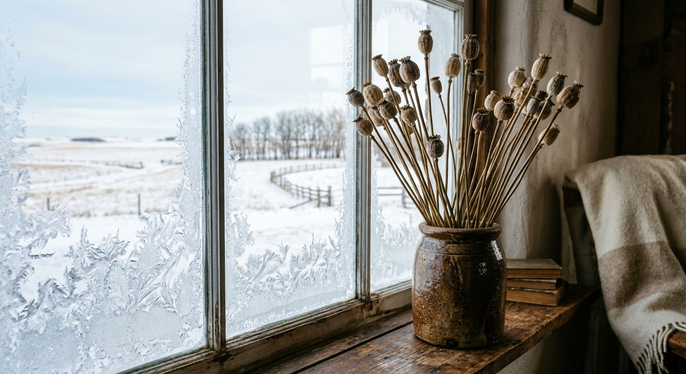
Quick Answer: Poppy Pods in Manitoba
Poppy pods are the dried seed capsules of the poppy plant. In Manitoba, they’re used for floral design, home decor, and crafts. Choose stemmed papaver pods for vases and bouquets, dried pod heads for wreaths and ornaments, and fresh pods only if you plan to dry them yourself in late summer. Manitoba’s two biggest risks are summer humidity, which causes mold, and dry winter furnace air, which makes pods brittle. The opium poppy is federally regulated in Canada, so check current Health Canada and border guidance before ordering. Poppy pods are for decorative use only and are never safe to eat or brew.
Key Takeaways
- Project decides the type. Stems for upright displays, loose heads for crafts, fresh pods only for planned DIY drying.
- Season decides the timing. Late August to early September is the best window to dry or receive pods.
- Room decides the lifespan. Keep pods away from heat vents, cold glass, and damp basements.
- Winter needs a buffer. Order about 15% extra for winter projects, since dry air makes pods easier to crack.
- Rules always apply. Federal law, not provincial law, governs poppy pods in Manitoba.
- Decor only. Poppy pods are ornamental. They are not safe to consume in any form.
What Are Poppy Pods?
Poppy pods are the rounded seed capsules that form after a poppy flower drops its petals. The center of the bloom swells into a firm pod topped with a ridged “crown.” Inside, hundreds of tiny seeds mature for the next generation of plants.
Once dried, pods turn soft tan, gray, or silvery brown. They hold their shape for years, which is why florists and crafters prize them.
The Main Poppy Species You’ll Encounter
Several poppy species produce pods. They differ in size, shape, and how well they handle Manitoba’s short growing season.
| Species | Common Name | Pod Size | Notes for Manitoba |
|---|---|---|---|
| Papaver somniferum | Breadseed or opium poppy | Large, bulbous, distinct crown | Classic decorative pod; federally regulated |
| Papaver orientale | Oriental poppy | Medium | Hardy perennial for sheltered, sunny prairie beds |
| Papaver rhoeas | Corn or Flanders poppy | Small, delicate | Fast annual that often self-seeds |
| Papaver nudicaule | Iceland poppy | Compact | Very cold-tolerant; well suited to prairie gardens |
Most commercial papaver poppy pods sold for decor come from Papaver somniferum, because its pods are the largest and most sculptural. For cold-climate growing notes, the University of Saskatchewan’s prairie gardening resources are a helpful regional reference.
Why Designers and Crafters Value Dried Poppy Pods
Dried poppy pods offer a rare mix of traits:
- Longevity: Properly dried pods keep their shape for several years.
- Neutral color: Soft grays, tans, and silvery browns suit almost any palette.
- Structure: Firm walls handle wire, glue, and paint.
- Texture: The ridged crown adds detail to even the simplest arrangement.
Why Poppy Pods Are Popular Across Manitoba
Manitoba has a long tradition of harvest decor, and dried botanicals fit right in. Three groups drive steady demand.
Wedding and Event Florists
Winnipeg, Brandon, Steinbach, and lake-country venues near Gimli and the Whiteshell host weddings all year. Winter weddings are common here, and fresh flowers are costly and fragile in deep cold. Dried arrangements travel well between heated cars and venues, photograph beautifully, and last long after the event. Poppy pods add structure to bouquets, boutonnieres, and long-table centerpieces.
Home Decorators
Manitoba’s popular interior styles favor natural, earthy materials. Prairie farmhouse, Exchange District loft, lake cottage, and heritage homes all suit a cluster of pods in a simple vessel. Pods also pair well with prairie botanicals like dried wheat, oats, flax, and native grasses.
Gardeners
Manitoba gardeners grow ornamental poppies from the Red River Valley to Westman and the Interlake. Hot July days ripen pods quickly, and many growers dry their own for wreaths and seed saving.
Scenario: A Winnipeg florist books four December weddings. She needs 180 uniform pods that won’t crack in transit from a heated studio to an unheated venue entrance. Pre-dried, graded pods give her consistent stock without weeks of home drying.
Know the Rules: Legal and Safety Facts for Poppy Pods in Manitoba
Read this section before you place any order. It’s the most important part of this guide.
Federal Law Applies, Not Provincial Law
The opium poppy (Papaver somniferum) is listed under Canada’s Controlled Drugs and Substances Act. Poppy seeds sold as food are exempt. Other parts of the plant, including pods, fall under federal rules. Ornamental pods are widely used in floral design, but you are responsible for knowing how the law applies to you.
Keep these points in mind:
- Border shipments can be inspected. The Canada Border Services Agency may inspect, hold, or seize plant material entering Canada, including decorative pods.
- Plant imports have their own rules. The Canadian Food Inspection Agency sets requirements for importing plants and plant products to protect Canadian agriculture. That matters in a farming province like Manitoba.
- Rules can change. Check current Health Canada guidance on controlled substances before ordering in quantity.
- Business buyers face added scrutiny. Florists and retailers who resell pods should confirm their obligations before stocking them.
Decorative Use Only
Poppy pods are sold for ornamental, floral, and craft purposes. Pods from Papaver somniferum naturally contain opium alkaloids in unpredictable amounts. Teas and other preparations made from pods have caused serious poisonings and deaths.
Do not eat, brew, or consume poppy pods in any form. Keep them out of reach of children and pets. If someone swallows any part of a pod, call 911 or your local poison center right away.
Watch for this signal: If a product listing focuses on “potency” or effects rather than size, color, and condition, it isn’t a decorative product. Move on.
Common mistake: Assuming anything sold online can be legally imported anywhere. Confirm the rules for your location first. For general product questions, visit the Premium Poppy Pods FAQ page.
Fresh vs. Dried vs. Papaver Poppy Pods: Which Should You Choose?
Start with what you’re making. Your project narrows your options fast.
Fresh Poppy Pods
Fresh poppy pods are harvested green and firm. They suit buyers who want to control the drying process. They need two to four weeks of drying and the right conditions. In Manitoba, late summer is the best window, before furnace season begins. Explore fresh, untreated poppy pods for drying if you plan to dry your own.
Dried Poppy Pod Heads
Dried poppy pods arrive ready to use. They’re lightweight, stable, and easy to store. Loose dried poppy pod heads are ideal for wreaths, garlands, shadow boxes, and painted ornaments because stems don’t get in the way of wiring and gluing.
Papaver Poppy Pods (Long-Stem)
Papaver poppy pods are usually sold dried with long stems attached. You can drop them straight into a vase, bouquet, or event centerpiece with no wiring. Grade A dried papaver poppy pods are a florist favorite because their heads and stems are sorted for consistency.
Comparison Table
| Feature | Fresh Poppy Pods | Dried Poppy Pod Heads | Papaver Poppy Pods (Stemmed) |
|---|---|---|---|
| Ready to use | No, drying required | Yes | Yes |
| Best for | DIY drying projects | Wreaths, crafts, ornaments | Vases, bouquets, events |
| Color | Green to blue-green | Tan, gray, silvery brown | Tan, gray, silvery brown |
| Shelf life | Short until dried | Several years | Several years |
| Effort level | High | Low | Low |
| Manitoba climate risk | Mold in humid summer weeks | Brittleness in winter | Brittleness in winter |
Three Questions That Decide Your Pod Type
1. Do you need stems? For a vase, bouquet, or tall arrangement, choose stemmed papaver pods. For wreaths, ornaments, and shadow boxes, choose loose pod heads.
2. Do you want to dry them yourself? If you enjoy the process and have a dry, airy indoor space in late summer, fresh pods give you full control. If you need pods for an event next month, buy them pre-dried.
3. How much consistency do you need? A single vase forgives small size differences. Twenty matching wedding centerpieces do not. Events and retail displays call for graded stock.
Quick Decision Guide
| Your Project | Best Pod Type | Manitoba Tip |
|---|---|---|
| Vase or tall arrangement | Stemmed papaver pods | Keep away from floor vents |
| Wreath or garland | Dried pod heads | Hang indoors in winter |
| Painted ornaments | Dried pod heads | Paint in a heated, ventilated room |
| Wedding or event florals | Graded stemmed pods | Add a 15% buffer for winter dates |
| DIY drying project | Fresh pods | Dry in August or early September |
Bottom line: Need stems? Go papaver. Need craft flexibility? Go pod heads. Need speed? Skip fresh.
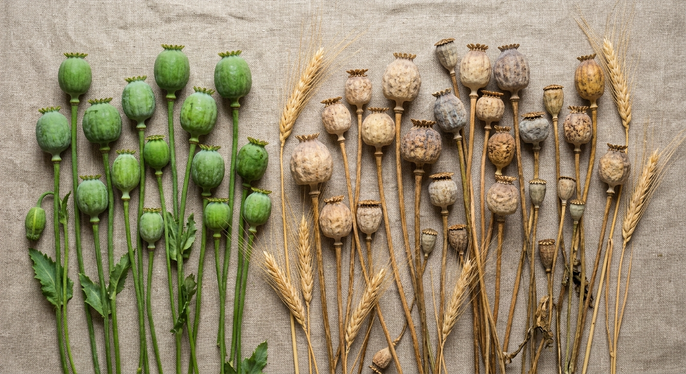
Manitoba’s Climate: Two Problems, Months Apart
Most dried-flower advice assumes one climate problem: humidity. Manitoba has two, and they arrive at opposite ends of the year. Manitoba has a true continental climate, with big swings between seasons. You can review local humidity, temperature, and frost patterns through Environment and Climate Change Canada’s historical climate data.
Summer: Humid Heat and Storms
From late June through August, the Red River Valley often sees muggy days, heavy overnight dew, and fast-moving thunderstorms.
- Risk: Mold on pods drying outdoors or in damp basements.
- Best move: Dry pods indoors with a fan, and harvest before a storm, not after.
- Watch for: Dark speckling or a musty smell.
Late Summer and Early Fall: The Best Window
Late August through early September usually brings cooler nights and drier air before the furnace kicks on. Pods dry evenly here, without July’s mold risk or January’s brittleness.
- Risk: Early frost. Winnipeg often sees its first fall frost in mid to late September.
- Best move: Cut garden pods as soon as they rattle and finish drying them indoors.
Winter: Very Dry Indoor Air
When it’s -30°C outside, forced-air furnaces run hard. Indoor humidity can fall below 30%, and as low as 15% to 25% near heat vents. Dry air won’t cause mold, but it does make pod walls and crowns brittle.
- Risk: Snapped crowns, cracked walls, and shedding.
- Best move: Keep displays away from heat vents, baseboard heaters, and wood stoves.
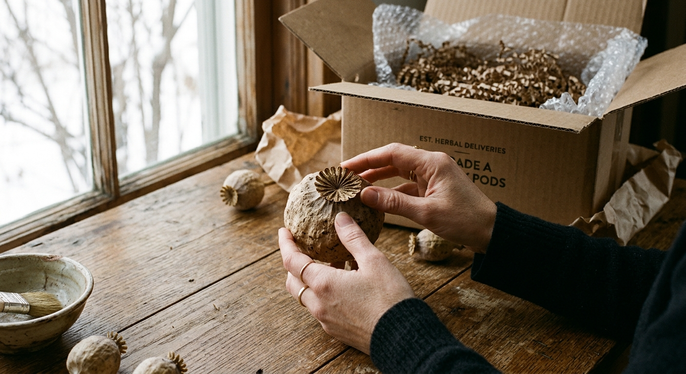
- Display tip: Dust pods with a soft makeup brush instead of handling them.
Regional Notes
- Winnipeg and the Red River Valley: Humid summers and very dry winters. Plan for both.
- Westman (Brandon, Dauphin): Slightly drier summers, which help with drying.
- Interlake and eastern lake country (Gimli, the Whiteshell): Lake humidity raises mold risk at seasonal cottages.
- Northern Manitoba (Thompson, The Pas): Very short seasons. Pre-dried pods are usually the practical choice.
Rule of thumb: In Manitoba summers, fight moisture. In Manitoba winters, fight dryness and rough handling.
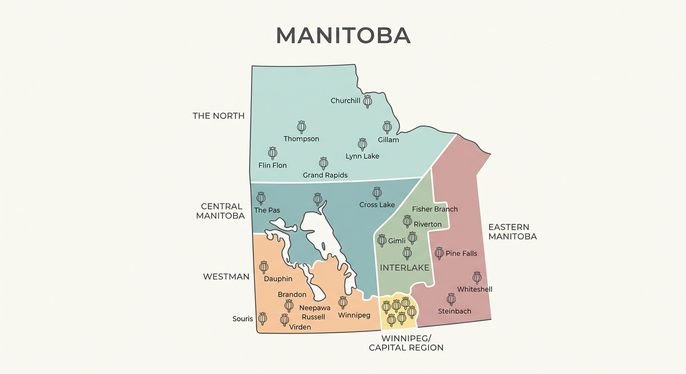
When to Buy: A Seasonal Buying Calendar for Manitoba
When you buy matters almost as much as what you buy. Each season changes how pods travel, dry, and settle into your home.
| Buying Window | Best Pick | Why | Watch For |
|---|---|---|---|
| Spring (April–May) | Dried pod heads or stemmed pods | Mild air, low risk on arrival | Damp basements during snowmelt |
| Early summer (June–July) | Pre-dried pods | Humidity makes home drying risky | Mold if stored near the floor |
| Late summer (August–early September) | Fresh or dried | Best drying window of the year | Hail and early frost for garden pods |
| Fall (late September–November) | Stemmed pods for harvest decor | Air is drier, furnaces not at full power yet | First hard frost during shipping |
| Winter (December–March) | Graded stemmed pods or pod heads | Sorted stock handles dry air better | Cold-shocked pods cracking on arrival |
Why Winter Buyers Should Choose Graded Stock
Ungraded pods vary in wall thickness, and thin-walled pods crack first in dry furnace air. Graded stock is sorted for size and condition, so you get fewer weak pods in each batch.
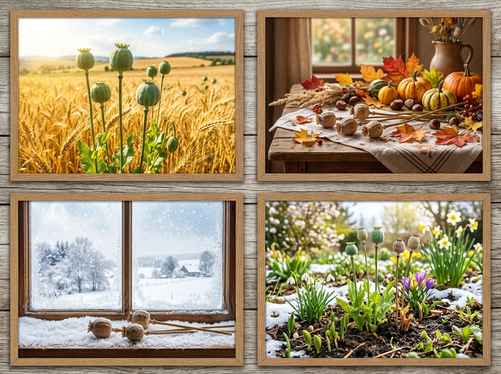
Where to Display: A Room-by-Room Placement Guide
The spot you choose can add years to your pods or ruin them in a single season. Manitoba homes have some specific trouble spots.
| Room or Spot | Rating | Why |
|---|---|---|
| Living room interior wall | Best | Stable temperature, away from vents and glass |
| Bedroom shelf or dresser | Best | Low traffic, little handling |
| Dining table centerpiece | Good | Fine if no floor or ceiling vent sits nearby |
| Mudroom or front entry | Use caution | Cold drafts every time the door opens |
| Sunroom or south-facing window | Use caution | Sun fades color; glass gets icy at night in winter |
| Kitchen or bathroom | Avoid | Steam and humidity swings |
| Unfinished basement | Avoid | Damp in summer and during spring thaw |
| Seasonal cottage over winter | Avoid | Freeze-thaw cycles crack pods |
Placement Rules That Work Year-Round
- Keep displays 1 to 2 meters (about 3 to 6 feet) from heat vents and baseboard heaters. Hot, dry air is the fastest way to crack crowns.
- Avoid windowsills in winter. Cold glass collects frost and condensation overnight.
- Rotate vases every few weeks. This keeps one side from fading in sunlight.
- Bring cottage arrangements home in the fall. Cabins near Lake Winnipeg, Clear Lake, and the Whiteshell go through damp springs and deep freezes.
Common mistake: Setting a dried centerpiece right above a floor register. Those pods dry out faster than anywhere else in the house and start shedding within weeks.

How to Buy Poppy Pods in Manitoba: A Buyer’s Checklist
Once you understand the rules, seasons, and placement, use this checklist to compare sellers and products.
Quality Signals to Look For
- Uniform size and shape. Consistency matters most for events and bulk projects.
- Firm, unblemished walls. Cracks, splits, or soft spots point to poor drying.
- Natural, even color. Look for tan, gray, or silvery tones with no dark speckling.
- Intact crowns. The ridged top should be whole, not crushed.
- Clear grading. Grade A labeling signals sorted, consistent stock.
What Grade A Means
Grade A pods have been sorted for consistent size, shape, and condition. They have intact crowns, smooth walls, and few defects. This matters most for weddings, retail displays, and multi-table events. In Manitoba, graded stock also holds up better in winter.
Natural vs. Dyed Pods
Dyed poppy pods are colored after drying. Natural pods keep their original tan, gray, or silvery-brown finish. Dyed pods suit bold seasonal decor. Natural pods suit prairie farmhouse, loft, and boho styles. Always check whether a listing says the pods are dyed.
Seller Signals to Look For
A trustworthy seller should offer:
- Detailed descriptions with species, size, and condition
- Photos of the actual product
- Transparent pricing by quantity
- Responsive support by email, phone, or chat
- Honest information about shipping and destination rules
Winter Delivery Tip: Let the Box Warm Up
Pods shipped through deep cold can be brittle on arrival. Leave the sealed box indoors for three to four hours before opening it. This lets the pods reach room temperature slowly and cuts down on cracking.
Inspect Every Order on Arrival
Once the box has warmed up, check a handful of pods:
- Walls: Firm and smooth, with no soft spots or splits.
- Crowns: Whole and well defined.
- Color: Even, with no dark spots.
- Smell: Neutral and dry. A musty odor means moisture got in.
- Size: Close to uniform if you ordered graded stock.
Bulk vs. Small Orders
Florists and event planners often save by ordering in bulk, since price per pod usually drops as quantity rises. Home decorators may only need a dozen pods. Start small to test quality, then scale up once you trust the supplier.
Compare sizes, stems, and pack quantities in the poppy pod shop.
How Many Poppy Pods Do You Need?
Order too few and your arrangement looks sparse. Order too many and you waste money. Manitoba’s dry winters call for a slightly larger buffer.
| Project | Approximate Pods Needed | Recommended Buffer |
|---|---|---|
| Single minimalist vase | 3–7 stemmed pods | 10% |
| Full mixed bouquet | 5–12 stemmed pods | 10% |
| 14-inch (36 cm) grapevine wreath | 25–40 pod heads | 15% in winter |
| 6-foot (1.8 m) holiday garland | 30–50 pod heads | 15% |
| Wedding centerpieces (per table) | 3–9 stemmed pods | 15% for winter dates |
| Painted ornaments | 1 pod head per ornament | 10–15% |
Pro tip: Order 10% extra for summer projects and about 15% extra for winter projects. Dry furnace air makes pods more likely to crack during wiring, painting, and setup.
Scenario: A Brandon couple plans a January wedding with 10 tables and five pods per table. That’s 50 pods. With a 15% winter buffer, they order about 58 graded stemmed pods. The spares cover crowns that crack during setup in a cold venue entrance.
Growing Poppies for Pods in Manitoba
This section is for gardeners who want to grow ornamental poppies and harvest their own pods.
Important: Growing Papaver somniferum without authorization can be an offense under the Controlled Drugs and Substances Act, even for ornamental use. Many Manitoba gardeners grow Iceland, Oriental, or corn poppies instead. These species produce attractive pods for drying and crafts.
Know Your Hardiness Zone
Most of southern Manitoba falls in plant hardiness Zones 2 to 3, with colder zones farther north. Check your exact location on Canada’s plant hardiness zone maps before choosing seed. Iceland poppies handle these conditions best. Oriental poppies need a sheltered, sunny spot.
Prairie Growing Tips
- Sow directly. Poppies dislike transplanting.
- Sow early. Scatter seed on the soil surface in late fall or very early spring. Poppy seeds benefit from cold exposure.
- Choose full sun and well-drained soil. Heavy Red River clay benefits from added compost.
- Thin seedlings so each plant has room to develop strong pods.
- Shelter from wind. Prairie gusts can snap tall stems before pods mature.
For province-specific growing information, explore Manitoba Agriculture.
Harvest Timing and Seed Saving
Most ornamental poppies here form pods in July and August. Harvest when pods feel firm, stems turn from green to tan, and seeds rattle inside. Experts recommend letting pods mature on their stems so seeds fully develop. Don’t wait too long, though. A September frost or summer hailstorm can ruin pods left outside.
To save seed, finish drying the pods indoors, tip the seeds into a labeled envelope, and store them somewhere cool and dry. For seed-saving best practices and heritage varieties, visit Seeds of Diversity Canada.
Mini case: A Brandon gardener lost most of her pods to an August hailstorm. The next year, she checked her plants every few days and cut stems as soon as the pods rattled. She finished drying them in her spare room and saved the whole crop.
How to Dry Poppy Pods in Manitoba
For a full walkthrough, read the ultimate guide to drying poppy seed pods. Here’s how to adapt the process to prairie conditions.
Three Reliable Drying Methods
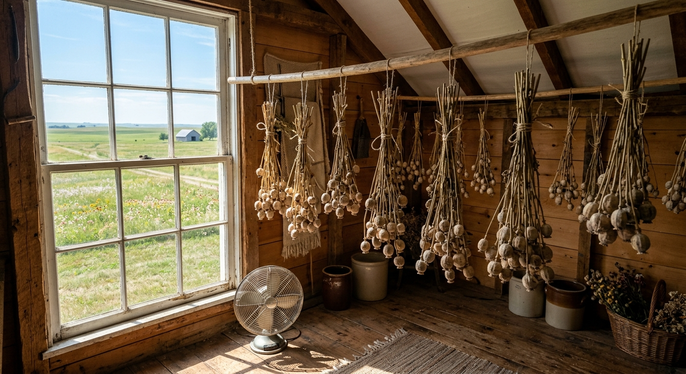
- Hang drying: Bundle 5 to 10 stems, tie them, and hang them upside down in a dark, airy room. Expect two to four weeks. This keeps stems straight.
- Air drying: Lay pods in a single layer on a mesh rack. Turn them every few days. Expect one to three weeks.
- In-situ drying: Leave pods on the plant until they rattle. This works only in dry spells, so watch the forecast closely.
Good airflow matters most. University horticulture guidance notes that plant material dries faster and resists mold when left uncovered with good airflow.
Ideal Drying Conditions
| Condition | Target |
|---|---|
| Humidity | Below 50% |
| Temperature | 16°C–27°C (60°F–80°F) |
| Airflow | Steady and gentle |
| Light | Dark or indirect |
| Spacing | Pods not touching |
How to Dry Poppy Pods During a Humid Manitoba Summer
- Harvest pods on a dry day when the seeds rattle and stems turn tan.
- Bundle 5 to 10 stems and tie them together.
- Hang them upside down in a dark upstairs room, not a damp basement.
- Run a dehumidifier or air conditioner to keep humidity below 50%.
- Add a small oscillating fan for steady airflow.
- Wait two to four weeks, then tap each pod to check for a hollow sound.
Common mistake: Drying pods in an unfinished basement in July. Cool, damp air slows drying and invites mold. Choose an upstairs room instead.
How to Know When Pods Are Fully Dry
Your pods are ready when they:
- Feel lightweight in your hand
- Sound hollow when tapped
- Rattle when shaken
- Have shifted to tan, gray, or silvery brown
If a pod still feels heavy, give it a few more days.
Should You Use the Oven?
Oven drying isn’t recommended. Heat can scorch pods, crack their walls, and fade their color. If you’re short on time, buy pre-dried pods instead.
Storing Dried Poppy Pods So They Last for Years
Good storage protects your pods through both humid summers and dry winters.
- Confirm they’re fully dry. Sealing damp pods is the fastest way to ruin a batch.
- Use breathable containers. Cardboard boxes, paper bags, or fabric bags let stray moisture escape. Avoid sealed plastic unless pods are bone-dry.
- Add silica gel packets in summer. They help through humid July and August weeks.
- Choose a stable spot. A closet on an interior wall avoids cold drafts and heat vents.
- Skip garages and unheated cottages. Freeze-thaw cycles crack pods.
- Stack gently. Crowns crush under weight, especially when brittle in winter.
- Label your batches. Note the type, date, and source.
Check yourself: If you smell mustiness when you open a box, inspect every pod. Remove any with dark spots, space the rest apart, and add fresh silica packets.
Year-Round Care: Keeping Poppy Pod Displays Fresh in Manitoba
A good display can last for years with a little seasonal attention.
Winter: Protect Against Dryness
- Move arrangements away from heat. Keep them clear of vents, baseboard heaters, and fireplaces.
- Set a sensible humidity. A room humidifier set to about 30% to 40% helps both you and your pods. On the coldest nights, stay at the lower end to avoid frost on windows.
- Handle less. Move arrangements as a whole vase, not stem by stem.
- Wire carefully. Push floral wire through the base of the pod, not the crown.
- Paint indoors. Most spray paints won’t cure properly in the cold. Use a heated, ventilated room.
- Keep wreaths inside. A dried pod wreath on a front door can lose half its crowns in one windy cold snap. Hang it on an interior door or above a mantel instead.
Spring: Inspect and Refresh
- Dust pods with a soft brush or a hair dryer on the cool setting.
- Replace any crowns that cracked over the winter.
- Watch basement storage during snowmelt, when dampness rises.
Summer: Protect Against Moisture
- Tuck a silica gel packet into the base of opaque vases.
- Run air conditioning or a dehumidifier during muggy stretches.
- Check pods weekly for dark speckling or a musty smell.
- Keep displays out of direct sun to prevent fading.
Fall: Rotate and Pack
- Refresh arrangements with harvest elements like wheat or oats.
- Pack off-season pods in labeled cardboard boxes before furnace season.
- Bring cottage arrangements home before the first hard freeze.
Styling Ideas: How Manitoba Designers Use Dried Poppy Pods
These ideas suit professional florists and weekend decorators alike.
Floral Arrangements
- Vase displays: Use 3 to 7 stemmed pods in an odd-numbered group. Stagger heights so each crown shows.
- Prairie bouquets: Combine pods with dried wheat, oats, flax, and native grasses.
- Wedding tablescapes: Line long tables with bud vases holding one stemmed pod each.
- Boutonnieres: Pair a single small pod with a sprig of dried wheat.
Seasonal Decor
- Autumn harvest: Mix pods with wheat sheaves, small pumpkins, and dried leaves.
- Winter holidays: Paint pod crowns gold, silver, or white for garlands and mantel displays.
- Spring refresh: Add pods to arrangements with dried strawflowers for soft color while the snow melts.
Crafts and DIY Projects
- Wreaths: Wire pod heads onto a grapevine base, and hang the finished wreath indoors in winter.
- Shadow boxes: Arrange pods with pressed prairie grasses from a summer walk.
- Ornaments: Paint pods in metallic tones for holiday gifts.
How to Paint Dried Poppy Pods
Firm pod walls hold acrylic and spray paint well. Make sure pods are fully dry first. Apply light coats and let each one dry so paint doesn’t pool in the crown ridges. Heavy paint also adds weight to fragile walls.
Ready-to-use dried poppy pod heads for crafts let you skip the drying stage and start creating right away.

Matching Poppy Pods to Manitoba Decor Styles
The same pod can look elegant or out of place depending on the room.
Prairie Farmhouse
Shiplap, reclaimed wood, and open fields outside the window call for relaxed, harvest-inspired looks.
- Cluster pod heads in galvanized buckets or enamelware.
- Pair with dried wheat as a nod to prairie farms.
- Hang a pod-studded wreath in an interior entryway.
Exchange District Loft and Urban Modern
Brick, timber beams, and big warehouse windows reward restraint.
- Use 3 to 7 stemmed papaver pods in one matte vessel.
- Keep the natural silvery-gray finish.
- Add one other texture at most, such as a single grass stem.
Lake Cottage Style
Cabins near Lake Winnipeg, Clear Lake, and the Whiteshell suit cozy, earthy arrangements.
- Mix pods with pinecones, birch branches, and seed heads.
- Use woven baskets or stoneware crocks.
- Bring arrangements home at the end of the season.
Heritage and Cottage Homes
Older homes in Wolseley, Crescentwood, and small-town main streets suit soft, layered looks.
- Combine pods with dried hydrangea, statice, and strawflowers.
- Use vintage pitchers or ironstone jugs.
- Brush a light wash of white or blush paint on the crowns.
Boho and Wedding Florals
This texture-loving style is popular at barn and lake venues across the province.
- Use stemmed pods as structure in pampas grass bouquets.
- Tuck small pods into boutonnieres.
- Use single-pod bud vases along long tables.
Rule of thumb: Minimal spaces want fewer, taller pods. Rustic and cottage spaces want fuller clusters and mixed textures.

Troubleshooting: Common Poppy Pod Problems in Manitoba
Use this table to diagnose and fix problems fast.
| Symptom | Likely Cause | Fix |
|---|---|---|
| Crowns snapping off | Dry furnace air or heavy handling | Move away from vents; raise humidity to 30%–40% |
| Pods cracked on arrival | Cold shock from winter shipping | Let boxes warm up for 3–4 hours before opening |
| Dark speckling on walls | Summer humidity or damp storage | Remove affected pods; add silica gel and airflow |
| Musty smell from storage box | Pods stored before fully dry | Inspect every pod, air them out, repack with fresh silica |
| Faded, bleached color | Direct sun through south-facing windows | Move to a north- or east-facing room |
| Shedding near the dining table | Floor or ceiling vent nearby | Relocate the centerpiece |
| Wreath losing pods outdoors | Wind and extreme cold | Rehang indoors for the winter |
| Pods shriveled after drying | Harvested too early | Wait until seeds rattle and stems turn tan |
Common Mistakes to Avoid
These errors come up again and again with Manitoba buyers and growers:
- Ignoring federal and import rules. Orders can be held or seized at the border.
- Drying in damp basements. Summer humidity invites mold.
- Sealing pods too soon. Trapped moisture ruins whole batches.
- Opening winter deliveries right away. Cold-shocked pods crack.
- Placing pods near heat vents. Dry furnace air makes them brittle.
- Hanging dried wreaths outdoors in winter. Wind and cold snap crowns.
- Leaving pods at the cottage over winter. Freeze-thaw cycles crack them.
- Buying ungraded stock for events. Mixed sizes look uneven.
- Treating pods as anything but decor. They are never safe to consume.
Recap: Your Next Steps
Here’s what to remember about poppy pods in Manitoba:
- Choose fresh pods for DIY drying, dried pod heads for crafts, and stemmed papaver pods for arrangements.
- Check federal and border rules before you order.
- Time your order to the season, with late summer as the sweet spot.
- Display pods on interior walls, away from vents, cold glass, and damp basements.
- Compare sellers on grading, photos, and transparency.
- Order 10% extra, or 15% for winter projects.
- Store pods in breathable containers in a stable, heated space.
Your next step: Decide whether your project needs stems or loose heads. Check the seasonal calendar to time your order, then estimate your quantity with the buffer table. Compare stemmed papaver poppy pods, dried poppy pod heads, and fresh poppy pods in the premium poppy pod shop. Confirm the rules for your location before ordering. For more background, visit the Premium Poppy Pods homepage or browse common questions about poppy pods.
Poppy Pods in Manitoba: Frequently Asked Questions
What are poppy pods?
Poppy pods are the rounded seed capsules that form after a poppy flower drops its petals. Each pod has firm walls, a ridged crown, and hundreds of tiny seeds inside. Once dried, pods turn tan, gray, or silvery brown and keep their shape for years. Florists and crafters across Manitoba use them in bouquets, wreaths, and harvest decor.
Can you buy poppy pods in Manitoba?
Decorative poppy pods are sold to buyers in Manitoba, but federal rules apply first. The opium poppy is listed under Canada’s Controlled Drugs and Substances Act, and shipments crossing the border can be inspected or held. Check current Health Canada and Canada Border Services Agency guidance before you order, especially in bulk or for resale.
Are poppy pods legal in Manitoba?
Poppy pods fall under federal law in Manitoba, not provincial law. Papaver somniferum is listed under the Controlled Drugs and Substances Act, and food-grade poppy seeds are exempt. Shipments can be inspected, held, or seized at the border. Rules can change, so check current Health Canada and CBSA guidance before ordering.
What is the difference between fresh and dried poppy pods?
Fresh poppy pods are green and still hold moisture, so they need two to four weeks of drying before long-term use. Dried poppy pods are lightweight, stable, and ready to display right away. Choose fresh pods if you want to control drying in late summer. Choose dried pods if you need them quickly.
What are papaver poppy pods?
Papaver poppy pods are seed pods from Papaver species, most often Papaver somniferum, which produces the largest and most sculptural pods. They are usually sold dried with long stems attached. Florists prefer them for vases, bouquets, and wedding tables because the stems are ready to use.
Which type of poppy pod should I buy?
The right poppy pod depends on your project. Buy stemmed papaver pods for vases, bouquets, and event florals. Buy loose dried pod heads for wreaths, garlands, and ornaments. Buy fresh pods only if you plan to dry them yourself in late summer and have an indoor space with humidity below 50%.
When is the best time to buy or dry poppy pods in Manitoba?
The best time to buy or dry poppy pods in Manitoba is late August through early September. The air is usually drier than in July, and furnaces haven’t started running yet. Winnipeg often sees its first fall frost in mid to late September, so cut garden pods as soon as they rattle.
How long do dried poppy pods last?
Properly dried and stored poppy pods last several years. They keep their shape best in breathable containers in a cool, dark, stable space. In Manitoba, protect them from summer humidity, which causes mold, and from dry winter furnace air, which makes them brittle.
Why do dried poppy pods crack in a Manitoba winter?
Dried poppy pods crack in winter because forced-air furnaces can drop indoor humidity below 30%, and even lower near heat vents. That dryness makes walls and crowns brittle. Keep displays 1 to 2 meters from vents and heaters, aim for 30% to 40% indoor humidity, and handle pods as little as possible.
How should I open a poppy pod delivery in cold weather?
Leave the sealed box indoors for three to four hours before opening it. Pods shipped through deep cold can be brittle on arrival, and opening the box right away can crack crowns. Once the pods reach room temperature, inspect a handful for intact crowns, firm walls, and even color.
Where should I display dried poppy pods in a Manitoba house?
Display dried poppy pods on an interior wall in a living room or bedroom. Avoid heat vents, cold windowsills, kitchens, bathrooms, unfinished basements, and drafty entryways. A stable temperature and little handling help pods last for years.
How do you dry poppy pods in a humid Manitoba summer?
To dry poppy pods in a humid Manitoba summer, hang them in a dark upstairs room with a small fan and a dehumidifier or air conditioning. Keep humidity below 50% and skip unfinished basements. Allow two to four weeks, then tap each pod to check for a hollow sound.
Why are my dried poppy pods getting moldy?
Dried poppy pods get moldy from high humidity, poor airflow, or storage before they were fully dry. Remove any pods with dark spots or a musty smell. Space the rest apart, run a fan or dehumidifier, and add fresh silica gel packets before storing them again.
How many poppy pods do I need for a wreath?
A 14-inch (36 cm) grapevine wreath usually needs about 25 to 40 dried pod heads. Larger or fuller designs need more. Order 10% extra for summer projects and about 15% extra for winter projects to cover breakage.
Can I hang a dried poppy pod wreath outdoors in winter?
Hanging a dried poppy pod wreath outdoors in a Manitoba winter isn’t recommended. Strong wind and temperatures near -30°C make crowns brittle, and one cold snap can strip half the pods. Hang the wreath on an interior door or above a mantel, well away from the fireplace.
Which poppies grow best in Manitoba?
Iceland poppies are very cold-tolerant and suit prairie gardens in Zones 2 to 3. Oriental poppies do well in sheltered, sunny beds, and corn poppies grow quickly as annuals. All prefer full sun, well-drained soil, and direct sowing in late fall or very early spring.
Can you grow opium poppies in Manitoba?
Growing Papaver somniferum without authorization can be an offense under Canada’s Controlled Drugs and Substances Act, even for ornamental use. Many Manitoba gardeners grow Iceland, Oriental, or corn poppies instead. These species produce attractive pods for drying and crafts.
Are poppy pods safe to eat or make into tea?
No, poppy pods are not safe to eat, brew, or consume in any form. They naturally contain opium alkaloids in unpredictable amounts, and teas made from pods have caused serious poisonings and deaths. Use poppy pods for decor, floral design, and crafts only, and keep them away from children and pets.
FAQ Schema (JSON-LD)
{
  "@context": "https://schema.org",
  "@type": "FAQPage",
  "mainEntity": [
    {
      "@type": "Question",
      "name": "What are poppy pods?",
      "acceptedAnswer": {
        "@type": "Answer",
        "text": "Poppy pods are the rounded seed capsules that form after a poppy flower drops its petals. Each pod has firm walls, a ridged crown, and hundreds of tiny seeds inside. Once dried, pods turn tan, gray, or silvery brown and keep their shape for years. Florists and crafters across Manitoba use them in bouquets, wreaths, and harvest decor."
      }
    },
    {
      "@type": "Question",
      "name": "Can you buy poppy pods in Manitoba?",
      "acceptedAnswer": {
        "@type": "Answer",
        "text": "Decorative poppy pods are sold to buyers in Manitoba, but federal rules apply first. The opium poppy is listed under Canada's Controlled Drugs and Substances Act, and shipments crossing the border can be inspected or held. Check current Health Canada and Canada Border Services Agency guidance before you order, especially in bulk or for resale."
      }
    },
    {
      "@type": "Question",
      "name": "Are poppy pods legal in Manitoba?",
      "acceptedAnswer": {
        "@type": "Answer",
        "text": "Poppy pods fall under federal law in Manitoba, not provincial law. Papaver somniferum is listed under the Controlled Drugs and Substances Act, and food-grade poppy seeds are exempt. Shipments can be inspected, held, or seized at the border. Rules can change, so check current Health Canada and CBSA guidance before ordering."
      }
    },
    {
      "@type": "Question",
      "name": "What is the difference between fresh and dried poppy pods?",
      "acceptedAnswer": {
        "@type": "Answer",
        "text": "Fresh poppy pods are green and still hold moisture, so they need two to four weeks of drying before long-term use. Dried poppy pods are lightweight, stable, and ready to display right away. Choose fresh pods if you want to control drying in late summer. Choose dried pods if you need them quickly."
      }
    },
    {
      "@type": "Question",
      "name": "What are papaver poppy pods?",
      "acceptedAnswer": {
        "@type": "Answer",
        "text": "Papaver poppy pods are seed pods from Papaver species, most often Papaver somniferum, which produces the largest and most sculptural pods. They are usually sold dried with long stems attached. Florists prefer them for vases, bouquets, and wedding tables because the stems are ready to use."
      }
    },
    {
      "@type": "Question",
      "name": "Which type of poppy pod should I buy?",
      "acceptedAnswer": {
        "@type": "Answer",
        "text": "The right poppy pod depends on your project. Buy stemmed papaver pods for vases, bouquets, and event florals. Buy loose dried pod heads for wreaths, garlands, and ornaments. Buy fresh pods only if you plan to dry them yourself in late summer and have an indoor space with humidity below 50%."
      }
    },
    {
      "@type": "Question",
      "name": "When is the best time to buy or dry poppy pods in Manitoba?",
      "acceptedAnswer": {
        "@type": "Answer",
        "text": "The best time to buy or dry poppy pods in Manitoba is late August through early September. The air is usually drier than in July, and furnaces haven't started running yet. Winnipeg often sees its first fall frost in mid to late September, so cut garden pods as soon as they rattle."
      }
    },
    {
      "@type": "Question",
      "name": "How long do dried poppy pods last?",
      "acceptedAnswer": {
        "@type": "Answer",
        "text": "Properly dried and stored poppy pods last several years. They keep their shape best in breathable containers in a cool, dark, stable space. In Manitoba, protect them from summer humidity, which causes mold, and from dry winter furnace air, which makes them brittle."
      }
    },
    {
      "@type": "Question",
      "name": "Why do dried poppy pods crack in a Manitoba winter?",
      "acceptedAnswer": {
        "@type": "Answer",
        "text": "Dried poppy pods crack in winter because forced-air furnaces can drop indoor humidity below 30%, and even lower near heat vents. That dryness makes walls and crowns brittle. Keep displays 1 to 2 meters from vents and heaters, aim for 30% to 40% indoor humidity, and handle pods as little as possible."
      }
    },
    {
      "@type": "Question",
      "name": "How should I open a poppy pod delivery in cold weather?",
      "acceptedAnswer": {
        "@type": "Answer",
        "text": "Leave the sealed box indoors for three to four hours before opening it. Pods shipped through deep cold can be brittle on arrival, and opening the box right away can crack crowns. Once the pods reach room temperature, inspect a handful for intact crowns, firm walls, and even color."
      }
    },
    {
      "@type": "Question",
      "name": "Where should I display dried poppy pods in a Manitoba house?",
      "acceptedAnswer": {
        "@type": "Answer",
        "text": "Display dried poppy pods on an interior wall in a living room or bedroom. Avoid heat vents, cold windowsills, kitchens, bathrooms, unfinished basements, and drafty entryways. A stable temperature and little handling help pods last for years."
      }
    },
    {
      "@type": "Question",
      "name": "How do you dry poppy pods in a humid Manitoba summer?",
      "acceptedAnswer": {
        "@type": "Answer",
        "text": "To dry poppy pods in a humid Manitoba summer, hang them in a dark upstairs room with a small fan and a dehumidifier or air conditioning. Keep humidity below 50% and skip unfinished basements. Allow two to four weeks, then tap each pod to check for a hollow sound."
      }
    },
    {
      "@type": "Question",
      "name": "Why are my dried poppy pods getting moldy?",
      "acceptedAnswer": {
        "@type": "Answer",
        "text": "Dried poppy pods get moldy from high humidity, poor airflow, or storage before they were fully dry. Remove any pods with dark spots or a musty smell. Space the rest apart, run a fan or dehumidifier, and add fresh silica gel packets before storing them again."
      }
    },
    {
      "@type": "Question",
      "name": "How many poppy pods do I need for a wreath?",
      "acceptedAnswer": {
        "@type": "Answer",
        "text": "A 14-inch (36 cm) grapevine wreath usually needs about 25 to 40 dried pod heads. Larger or fuller designs need more. Order 10% extra for summer projects and about 15% extra for winter projects to cover breakage."
      }
    },
    {
      "@type": "Question",
      "name": "Can I hang a dried poppy pod wreath outdoors in winter?",
      "acceptedAnswer": {
        "@type": "Answer",
        "text": "Hanging a dried poppy pod wreath outdoors in a Manitoba winter isn't recommended. Strong wind and temperatures near -30°C make crowns brittle, and one cold snap can strip half the pods. Hang the wreath on an interior door or above a mantel, well away from the fireplace."
      }
    },
    {
      "@type": "Question",
      "name": "Which poppies grow best in Manitoba?",
      "acceptedAnswer": {
        "@type": "Answer",
        "text": "Iceland poppies are very cold-tolerant and suit prairie gardens in Zones 2 to 3. Oriental poppies do well in sheltered, sunny beds, and corn poppies grow quickly as annuals. All prefer full sun, well-drained soil, and direct sowing in late fall or very early spring."
      }
    },
    {
      "@type": "Question",
      "name": "Can you grow opium poppies in Manitoba?",
      "acceptedAnswer": {
        "@type": "Answer",
        "text": "Growing Papaver somniferum without authorization can be an offense under Canada's Controlled Drugs and Substances Act, even for ornamental use. Many Manitoba gardeners grow Iceland, Oriental, or corn poppies instead. These species produce attractive pods for drying and crafts."
      }
    },
    {
      "@type": "Question",
      "name": "Are poppy pods safe to eat or make into tea?",
      "acceptedAnswer": {
        "@type": "Answer",
        "text": "No, poppy pods are not safe to eat, brew, or consume in any form. They naturally contain opium alkaloids in unpredictable amounts, and teas made from pods have caused serious poisonings and deaths. Use poppy pods for decor, floral design, and crafts only, and keep them away from children and pets."
      }
    }
  ]
}
