
- Your cart is empty
- Continue shopping
-
sales@primiumpoppypods.com
- Posted on
- Categories:Uncategorized
- 0 comments
Dried Poppy Pods Canada: The Complete Authority Guide
Finding genuine, high-grade dried poppy pods in Canada is harder than it should be. Most sellers ship brittle, cracked pods with faded color, inconsistent sizing, and zero clarity on grade or origin — and by the time your order arrives, half the batch is unusable for the arrangement, wreath, or décor project you planned. This guide fixes that.
You’re about to learn exactly what dried poppy pods are, the specific types available, how to build professional floral arrangements and wreaths, how to judge premium quality in under 60 seconds, how to care for your displays for years, and where to buy dried poppy pods in Canada with reliable coast-to-coast shipping. This is not a vague overview — it’s a decision-grade authority guide built to get you the right pods on the first order.
Who this is for: florists, event planners, crafters, and homeowners across Canada who want sculptural, long-lasting botanicals — not disposable stems that shatter in a week.
What Are Dried Poppy Pods
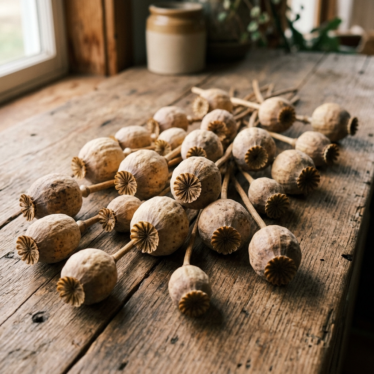
Dried poppy pods are the mature, harvested seed heads of the poppy plant — most commonly Papaver somniferum, also called the opium poppy or breadseed poppy. After the flower’s petals fall away, the plant forms a round or oval seed capsule crowned with a distinctive star-shaped disc. When these capsules are cut, cured, and dried, they become the sculptural, long-lasting pods prized in floral design and home décor.
The appeal is structural. A properly dried pod holds its shape for years, resists shattering, and carries a natural gray-tan, silvery, or muted green tone that pairs with nearly any palette. Papaver somniferum is the same species documented by botanical references worldwide — you can review its full profile on Wikipedia’s Papaver somniferum page for the botanical background.
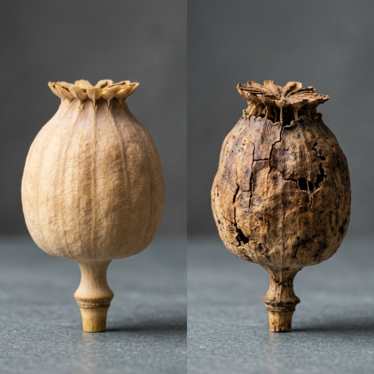
Here’s the distinction that matters for buyers: not every dried pod is decorative-grade. Pods harvested too early stay small and thin-walled. Pods dried too fast crack along the seams. Premium pods come from mature plants, cured slowly, and sorted by size and integrity before they ship. That difference is the entire reason quality varies so widely across Canadian suppliers.
You can see a full range of curated, decorative-grade options on the Premium Poppy Pods homepage.
Quick takeaway: Dried poppy pods are a permanent décor asset — but only when they’re mature, slow-cured, and sorted before shipping.
Types of Dried Poppy Pods
Poppy pods are not interchangeable. Each type carries a different size, wall thickness, crown shape, and visual character — and choosing the wrong one for your project wastes money. Here are the main categories available in Canada.
Dried Poppy Pod Heads
These are the classic seed heads — round to slightly oval capsules with a pronounced crown. They’re the workhorse of poppy décor: sturdy, versatile, and easy to incorporate into wreaths, dried bouquets, and centerpieces. Sizes typically range from small accent pods to large statement heads. Browse graded options on the Dried Poppy Pod Heads product page.
Papaver Somniferum Pods (Grade A)
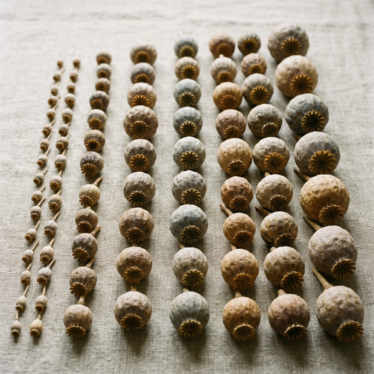
Grade A Papaver somniferum pods are the premium tier — selected for uniform size, thick walls, unbroken crowns, and clean coloring. These are the pods professional florists reach for when consistency across a large arrangement is non-negotiable. If your project demands a matched set rather than a mixed bag, start with the Papaver Poppy Pods (Grade A) page.
Fresh, Untreated Poppy Pods
Untreated pods retain their most natural finish — no artificial processing, no added coatings. They’re favored by makers who want raw, authentic material for crafts and natural décor. Their organic texture reads as authentic rather than manufactured. Explore them on the Fresh, Untreated Poppy Pods page.
Larger Sculptural Pods
For statement pieces — tall vase arrangements, dramatic wreaths, or standalone installations — larger pods deliver visual weight that smaller heads can’t match. See the range on the Opium Poppy Pods product page.
Quick reference by project type:
| Project | Best pod type |
|---|---|
| Matched floral arrangements | Papaver Somniferum Grade A |
| Wreaths & garlands | Dried Poppy Pod Heads |
| Natural, rustic crafts | Fresh, Untreated Pods |
| Statement centerpieces | Larger sculptural pods |
Reader checkpoint: If you’re choosing between a matched set and a mixed batch, pick Grade A for uniformity — standard heads for flexibility.
Uses & Benefits of Dried Poppy Pods
Why do dried poppy pods stay in demand year after year while other dried botanicals fade in and out of fashion? Because they solve three problems at once — longevity, versatility, and visual distinctiveness. Here’s where they deliver.
Decorative Uses
Dried poppy pods hold their form indefinitely with no water, no wilting, and no seasonal expiry. That makes them a permanent décor asset rather than a disposable one. Common applications include:
- Standalone vase displays — grouped stems create instant architectural interest.
- Shelf and mantel styling — a small bundle adds organic texture to any surface.
- Seasonal wreaths — pods integrate cleanly with eucalyptus, wheat, and dried grasses.
- Table centerpieces — sculptural heads anchor a composition without overwhelming it.
The neutral coloring is the strategic advantage. Where dyed flowers clash, natural pod tones blend — which means one purchase works across multiple rooms and multiple seasons.

Floral Design Applications
Professional florists rely on dried poppy pods for one reason: structure that survives transport and time. Fresh blooms bruise, wilt, and drop within days. Poppy pods hold through shipping, installation, and months of display. This is why they anchor everything from bridal bouquets to hotel-lobby installations. For guidance on integrating dried elements into professional arrangements, the American Institute of Floral Designers (AIFD) sets the standard for floral design education and technique.
Dried pods also let designers lock in a color story that won’t shift — a critical advantage for events planned weeks in advance.
Craft & Artistic Uses
Poppy pods take paint, gilding, and staining exceptionally well. Artists and makers use them for:
- Painted and gold-leafed ornaments
- Natural jewelry and pendant components
- Mixed-media sculpture and wall art
- Educational botany displays
Their symmetrical crowns and clean geometry make them a favorite subject for photographers and illustrators as well.
Wellness & Aromatic Décor
Beyond visual appeal, dried botanicals contribute to calming, natural interiors. Many buyers pair poppy pods with sage bundles and other dried elements to build grounding, spa-like spaces. Poppy seeds themselves are a recognized culinary ingredient rich in fiber, calcium, and essential fatty acids — one reason the plant has held cultural and household value for centuries.
Important: Dried poppy pods sold for décor and floral use are intended for decorative and ornamental purposes. Always follow Canadian regulations and use these products responsibly and as intended.
Step-by-Step Floral Arrangement Tips
A poppy pod arrangement fails when the pods sit flat, cluster unevenly, or overwhelm the softer elements around them. Follow this five-step process and you’ll build a balanced, professional-grade display on the first try.
1. Choose your container first. Select a vase or vessel that matches the scale of your pods. Tall sculptural heads need weight and height; smaller heads suit low bowls and compact ceramics. The container sets the proportion for everything that follows.
2. Build a structural base. Add floral foam or a grid of floral tape across the vessel opening. This holds each stem at the angle you set — no drifting, no collapse.
3. Place the largest pods first. Anchor your biggest Grade A pods as focal points, spacing them to create a triangle rather than a straight line. The triangle reads as balanced from every viewing angle.
4. Layer in supporting elements. Fill around the focal pods with smaller heads, dried grasses, eucalyptus, or wheat. Vary the heights to create depth — flat arrangements look lifeless.
5. Adjust negative space. Step back and check the gaps. Professional arrangements breathe — they don’t cram every inch. Remove one or two elements if the composition feels crowded.
The American Institute of Floral Designers (AIFD) sets the standard for floral design technique, and its core principle applies here: balance, proportion, and rhythm matter more than volume.

Mini-summary: Structure and spacing — not quantity — separate a designed arrangement from a random bundle of stems.
DIY Wreath & Craft Ideas
Store-bought wreaths cost more and last less than what you can build yourself with quality dried poppy pods. Here are project ideas that hold up for seasons, not weeks.
Seasonal wreath. Wire dried poppy pod heads onto a grapevine or wire base, alternating with eucalyptus, dried wheat, and berries. Cluster pods in odd-numbered groups of three or five — odd groupings read as more natural than even ones. A well-built poppy pod wreath survives storage and reuse year after year.
Gilded ornaments. Poppy pods take gold leaf, metallic paint, and stain exceptionally well. Paint the crowns, thread a ribbon through the stem, and you have durable ornaments that outlast paper or glass.
Table garland. Run a floral wire down the center of your table and attach pods, greenery, and candles at intervals. This creates a low, sculptural runner ideal for dinners and events.
Mixed-media wall art. Mount pods on a canvas or wooden panel alongside pressed botanicals for permanent, dimensional wall pieces.
Natural jewelry and pendants. Smaller pods work as pendant components and statement pieces when sealed and finished.
For any of these, start with sorted dried poppy pod heads so your crowns stay intact through the crafting process. Broken crowns ruin the finished look — quality material is the foundation of a quality craft.

Mini-summary: Quality pods don’t just look better — they make the entire project last longer and photograph cleaner for sharing.
How to Choose Premium Quality Pods
Most disappointing poppy pod orders share the same root cause — buyers can’t tell premium from filler before they purchase. Use this five-point checklist to judge quality fast and avoid wasted spend.
1. Wall integrity. Premium pods have thick, firm walls that resist gentle pressure. Thin, papery pods crush during shipping and handling — reject them.
2. Crown condition. The star-shaped crown should be intact and cleanly formed. Broken or missing crowns signal rough harvesting or poor sorting.
3. Color consistency. Look for even, natural tones — silvery gray, tan, or muted green. Blotchy discoloration or mold spotting indicates improper drying or storage.
4. Size matching. For arrangements, uniformity matters. Grade A batches are sorted to consistent dimensions; unsorted lots force you to hunt for usable pieces.
5. No cracking along seams. Fine cracks mean the pods were dried too aggressively and will shatter over time. Whole, seam-intact pods last for years.
Premium Poppy Pods sorts every batch against these five criteria before it ships — which means you receive display-ready pods, not a bag you have to cull. That sorting step is the difference between decorative-grade material and generic dried botanicals.
Caring for Dried Poppy Pod Displays
Dried poppy pods fail from three things — moisture, direct sun, and rough handling. Eliminate those, and your displays last for years. Follow these care rules to protect your investment.
- Keep them dry. Moisture softens pod walls and invites mold. Display and store poppy pods away from bathrooms, kitchens, and humid basements.
- Avoid direct sunlight. Prolonged UV exposure fades the natural tan and gray tones. Position displays away from south-facing windows to preserve color.
- Dust gently. Use a soft brush, a hairdryer on the cool setting, or a can of compressed air. Never wipe with a damp cloth.
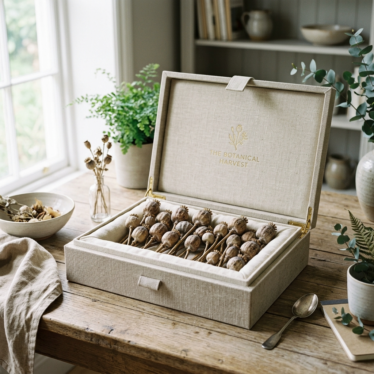
- Store flat and cushioned. When not on display, keep pods in a rigid box with padding so crowns don’t crack under pressure.
- Handle by the stem. Support pods from the stem, not the crown, to protect the star-shaped disc.
Do this consistently and your pods hold their form for several years — far longer than any fresh or low-grade dried alternative.
Mini-summary: Minimal care delivers maximum lifespan — exactly why dried poppy pods outperform disposable florals.
Where to Buy Dried Poppy Pods in Canada
Buying dried poppy pods in Canada comes with a real problem — most generic marketplaces list pods with no grade information, no size sorting, and no quality guarantee. You gamble on every order. That’s the gap Premium Poppy Pods closes.
Here’s what separates a specialist supplier from a generic reseller:
- Sorted grades, stated clearly. You choose the exact type and grade for your project — Grade A Papaver, standard heads, untreated pods, or larger sculptural pieces — instead of receiving a mixed, unlabeled batch.
- Consistent quality control. Every batch passes the five-point quality checklist before it ships.
- Full product range in one place. From dried poppy pod heads to Grade A Papaver pods and fresh untreated pods, the full catalog is available on the shop page.
- Transparent pricing. Price ranges are published by size and quantity — no hidden surprises at checkout.
When you buy decorative dried poppy pods in Canada, buy from a specialist that sorts, grades, and stands behind the product — not a general marketplace listing.
Shipping & Delivery in Canada
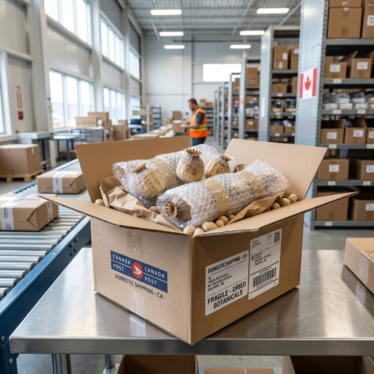
Slow, unreliable shipping ruins time-sensitive projects — a wreath needed for a weekend event is useless if it arrives the following Wednesday. Premium Poppy Pods ships across Canada with packaging built to protect fragile pods in transit.
What to expect when ordering:
- Coast-to-coast coverage. Orders ship to destinations across every province.
- Protective packaging. Pods are cushioned to preserve crown integrity and wall structure during handling.
- Order tracking. You receive confirmation and updates so you can plan around your delivery window.
To confirm current shipping timelines, rates, and coverage for your postal code, review the details at checkout on the shop page. Plan time-sensitive projects with a buffer — order early for events with fixed dates.
Frequently Asked Questions
Buying & Ordering
Q: Where can I buy dried poppy pods in Canada?
A: Buy dried poppy pods in Canada from Premium Poppy Pods, a specialist supplier that sorts and grades every batch before shipping. Unlike generic marketplaces that ship mixed, unlabeled lots, the full catalog is organized by type and grade on one shop page. You choose exactly what your project needs — no gambling on quality.
Q: How much do dried poppy pods cost in Canada?
A: Prices are published by size and quantity, with no hidden checkout surprises. Current ranges include:
- Dried Poppy Pod Heads: $160–$1,300
- Papaver Poppy Pods (Grade A): $185–$1,500
- Fresh, Untreated Poppy Pods: $150–$1,300
- Poppy Powder: $150–$1,650
Confirm live pricing for your selected size and quantity on the shop page.
Q: Do I need to buy in bulk, or can I order a small quantity?
A: You can order small accent quantities or large bulk lots — pricing scales by size and volume across every product line. Small orders suit single arrangements and craft projects; bulk orders serve florists, event planners, and retailers. Select your quantity directly on each product page.
Q: Are dried poppy pods legal to buy in Canada?
A: Dried poppy pods sold for decorative, floral, and ornamental purposes are widely available across Canada and purchased for crafts, arrangements, and home décor. Always use these products responsibly, strictly for their intended decorative purpose, and follow all applicable Canadian regulations.
Q: What’s the best dried poppy pod for a first-time buyer?
A: Start with Dried Poppy Pod Heads — they’re the versatile workhorse of poppy décor, sturdy enough for wreaths, bouquets, and centerpieces. They range from small accents to large statement heads, which makes them the safest choice when you’re still deciding on a project. If you need a matched set for a large arrangement, choose Grade A Papaver pods instead.
Quality & Types
Q: What are dried poppy pods?
A: Dried poppy pods are the mature, harvested seed heads of the poppy plant — most commonly Papaver somniferum. After the flower’s petals fall away, the plant forms a rounded capsule crowned with a distinctive star-shaped disc, which is then cut, cured, and dried. The result is a durable, sculptural element prized in floral design, home décor, and crafts. You can review the full botanical profile on Wikipedia’s Papaver somniferum page.
Q: What is the difference between Papaver somniferum pods and standard dried poppy pod heads?
A: Papaver somniferum Grade A pods are the premium tier — sorted for uniform size, thick walls, and intact crowns — ideal when consistency across an arrangement matters. Standard dried poppy pod heads are versatile and sturdy, suited to wreaths, bouquets, and general décor where a matched set isn’t required. Choose Grade A for precision; choose standard heads for flexibility.
Q: How do I know if I’m buying premium quality poppy pods?
A: Check these five things:
- Firm, thick walls that resist gentle pressure
- Intact star-shaped crowns with clean formation
- Even, natural coloring — silvery gray, tan, or muted green
- Consistent sizing across the batch
- No seam cracking
Premium Poppy Pods sorts every batch against these five criteria before it ships — so you receive display-ready pods, not a bag you have to cull.
Q: What’s the difference between treated and untreated poppy pods?
A: Fresh, untreated poppy pods keep their most natural finish — no coatings and no artificial processing — which makers prefer for rustic crafts and authentic natural décor. Treated pods may carry added processing for a specific look. If you want raw, organic texture that reads as authentic rather than manufactured, choose untreated.
Q: What are the largest dried poppy pods available?
A: For statement pieces — tall vase arrangements, dramatic wreaths, and standalone installations — larger sculptural pods deliver the visual weight smaller heads can’t match. Browse the bigger sizes on the Opium Poppy Pods product page. Match pod scale to your container: large heads need height and weight to look intentional.
Q: What is poppy powder used for?
A: Poppy powder is a ground preparation derived from poppy material, available in quantities from small to bulk. Confirm intended use and current pricing on the product page, and always follow applicable Canadian regulations for responsible use.
Uses & Décor
Q: What are dried poppy pods used for?
A: Dried poppy pods serve four main purposes:
- Decorative displays — vase arrangements, shelf styling, and mantel accents
- Floral design — wreaths, bouquets, and event installations
- Crafts and art — painted ornaments, mixed-media pieces, and natural jewelry
- Aromatic décor — paired with sage bundles for calming, natural interiors
Their neutral coloring blends with any palette, and a properly dried pod holds its form for several years with no maintenance.
Q: How do I use dried poppy pods in a floral arrangement?
A: Follow this five-step process:
- Choose a container that matches your pod scale
- Build a structural base with floral foam or tape
- Place your largest pods first as focal points in a triangle
- Layer smaller heads, dried grasses, and eucalyptus around them
- Adjust negative space so the arrangement breathes
Structure and spacing — not quantity — separate a designed arrangement from a random bundle. The American Institute of Floral Designers (AIFD) sets the standard for these techniques.
Q: Can I paint or gild dried poppy pods?
A: Yes. Dried poppy pods take gold leaf, metallic paint, and stain exceptionally well, which makes them a favorite for ornaments, mixed-media art, and finished jewelry components. Start with sorted dried poppy pod heads so the crowns stay intact through the crafting process — broken crowns ruin the finished look.
Q: Are dried poppy pods good for wreaths?
A: Dried poppy pods are ideal for wreaths — they hold their sculptural shape for years and integrate cleanly with eucalyptus, dried wheat, and berries. Wire the pod heads onto a grapevine or wire base in odd-numbered clusters of three or five for a natural look. A well-built poppy pod wreath survives storage and reuse season after season.
Care & Storage
Q: How long do dried poppy pods last?
A: Properly dried, thick-walled poppy pods hold their shape and color for several years when kept dry and out of direct sunlight. Quality drying is the deciding factor — pods dried too quickly develop seam cracks and shatter over time. That’s why sorted, graded pods outlast cheap marketplace lots by years.
Q: How do I care for and store dried poppy pods?
A: Protect your pods from the three things that destroy them — moisture, direct sun, and rough handling:
- Keep them dry — away from bathrooms, kitchens, and humid basements
- Avoid direct sunlight — UV exposure fades natural tones
- Dust gently — use a soft brush or cool-setting hairdryer, never a damp cloth
- Store flat and cushioned — in a rigid, padded box
- Handle by the stem — never by the crown
Follow these rules and your pods hold their form for several years.
Q: Why are my dried poppy pods cracking or falling apart?
A: Cracking almost always traces to one of two causes — pods dried too aggressively before purchase, or moisture and rough handling after. Fine seam cracks signal low-grade drying, while crushed crowns signal storage without padding. Buy thick-walled, seam-intact pods from a supplier that sorts every batch, and store them flat and dry to prevent the problem entirely.
Shipping & Delivery
Q: Does Premium Poppy Pods ship dried poppy pods across Canada?
A: Yes. Premium Poppy Pods ships coast-to-coast across every province, with protective packaging built to preserve crown integrity and wall structure in transit. You receive order confirmation and tracking so you can plan around your delivery window. Confirm current rates and timelines for your postal code at checkout on the shop page.
Q: How should I order for a time-sensitive event or project?
A: Order early and build in a buffer — a wreath needed for a weekend event is useless if it arrives the following Wednesday. Pods ship with tracking so you can plan around a confirmed delivery window. For fixed-date projects like weddings or seasonal displays, place your order well ahead and confirm timelines for your postal code at checkout.
Q: Can I order poppy tea or poppy pod tea heads too?
A: Yes. Beyond decorative pods, the catalog includes Poppy Tea from Dried Poppy Pod Seeds and related dried products. Browse the full selection on the shop page, and always use every product responsibly and in line with applicable Canadian regulations.
Ready to Order Premium Dried Poppy Pods?
Stop gambling on cracked, mismatched pods from generic sellers. Get sorted, graded, display-ready dried poppy pods shipped anywhere in Canada — on the first order.
Shop the full collection at Premium Poppy Pods now →
Browse dried poppy pod heads, Grade A Papaver pods, fresh untreated pods, and [larger sculptural pods](https://primiumpoppypods.com/product/opium
