
- Your cart is empty
- Continue shopping
-
sales@primiumpoppypods.com
- Posted on
- Categories:Uncategorized
- 0 comments
Nigella Flower: Beauty, Botany, and Cultural Significance
The nigella flower is a delicate yet striking plant that has earned admiration from gardeners, herbalists, and historians alike. Best known through species such as Nigella damascena (commonly called Love-in-a-Mist) and Nigella sativa (black cumin), nigella combines ornamental beauty with practical and cultural importance. Though modest in size, this flower has a surprisingly rich story.
Botanical Overview
Nigella belongs to the buttercup family, Ranunculaceae, and is native to southern Europe, North Africa, and parts of Asia. The plant is typically grown as an annual, reaching 20–50 cm in height. Its most distinctive feature is its finely divided, feathery foliage, which forms a mist-like veil around the blooms—hence the romantic name Love-in-a-Mist.
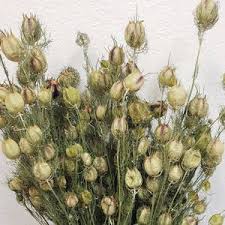
The flowers themselves are usually pale blue, though white, pink, and deeper blue cultivars exist. What appear to be petals are actually sepals, surrounding a prominent central structure of stamens and fused carpels. After flowering, nigella produces an attractive, inflated seed pod that dries well, making it popular in dried floral arrangements.
Ornamental Value in Gardens
Nigella is prized for its ease of cultivation and versatility in garden design. It thrives in full sun and well-drained soil, and once established, requires minimal care. Gardeners often sow seeds directly into the ground in spring, as nigella does not transplant well.
Because of its airy texture, nigella works beautifully in cottage gardens, wildflower meadows, and borders where a softer, more natural look is desired. It also self-seeds readily, returning year after year with little intervention.
Culinary and Medicinal Connections
While Nigella damascena is grown mainly for ornament, Nigella sativa has been cultivated for centuries for its seeds. Commonly known as black cumin or black seed, these seeds are widely used in Middle Eastern, South Asian, and North African cuisines. They have a slightly bitter, peppery flavor and are often sprinkled on bread or used in spice blends.
Traditional medicine systems, including Ayurveda and Unani, have long valued nigella seeds. Historically, they were believed to support digestion, immunity, and overall vitality. Modern research continues to explore these properties, though ornamental nigella flowers themselves are not used medicinally.
Cultural Symbolism
Nigella carries symbolic meaning in various cultures. In the Victorian language of flowers, Love-in-a-Mist represented “perplexity” or “bonds of love,” reflecting the way the bloom appears entwined in its own foliage. Its fleeting flowering period has also made it a symbol of delicate beauty and transience.
Conclusion
The nigella flower is a compelling example of how a single genus can bridge aesthetics, history, and utility. Whether admired for its soft blue blossoms in a summer garden or respected for the culinary legacy of its seeds, nigella continues to captivate across disciplines. Elegant yet resilient, it remains a small flower with enduring appeal.
